

Carbon Fiber vs Steel Beams for Walls
A basement wall that is starting to bow does not stay "slightly bowed" for long. What starts as a hairline crack or a subtle inward curve can turn into water intrusion, worsening movement, and a much more expensive repair. That is why homeowners often start comparing carbon fiber vs steel beams as soon as they notice the warning signs.
Both systems are used to stabilize damaged basement walls. Both can be legitimate solutions. But they are not interchangeable, and choosing the right one depends on how much movement has already happened, what caused it, and what kind of repair you want living in your basement for the long haul.
Carbon fiber vs steel beams: what is the real difference?
The biggest difference is how each system handles wall pressure and how invasive the installation is.
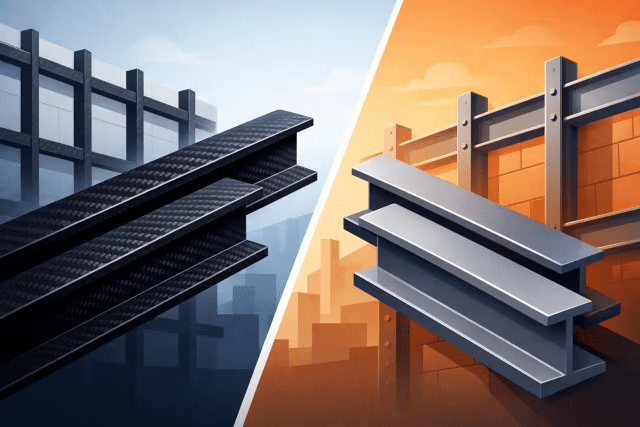
Carbon fiber reinforcement uses high-strength straps or fabric bonded directly to the interior face of the basement wall. Once installed correctly, the system helps stop further inward movement by creating a strong, low-profile restraint across the wall. It is engineered for walls that are still structurally recoverable and have early to moderate bowing, cracking, or lateral pressure.
Steel beams work differently. Vertical steel I-beams are set against the wall and mechanically anchored, usually at the floor and top framing. They brace the wall from the inside and resist additional inward movement through rigid structural support. In some cases, they may be paired with additional hardware or other foundation repair methods.
For a homeowner, that technical difference shows up in very practical ways. Carbon fiber is cleaner, flatter, and far less intrusive. Steel beams are more visible, bulkier, and often chosen when the damage is further along or the wall needs heavier bracing.
When carbon fiber makes more sense
Carbon fiber is often the better fit when the wall has started to move but has not failed beyond repair. That usually means early to moderate bowing, horizontal cracking, or signs of lateral pressure from expanding soil outside the foundation.
This is where many homeowners feel stuck. They know the wall is not okay, but they are not ready for excavation, major demolition, or a basement full of steel posts. Carbon fiber addresses that concern directly. It is installed from the interior, requires minimal disruption, and does not take up meaningful floor space. Once finished, it leaves a clean profile that is much easier to live with if the basement is finished or partially used for storage, laundry, or living space.
It also makes sense for homeowners focused on value. A properly designed carbon fiber wall reinforcement system can provide long-term stability without the cost and disruption that come with more invasive methods. For qualifying walls, that is a serious advantage.
Another overlooked benefit is resale. Buyers get nervous when they hear "foundation issue," but they also respond well to repairs that are documented, professionally installed, and backed by a strong warranty. A lifetime transferable warranty can go a long way in helping a repaired home feel protected rather than risky.
When steel beams may be the better choice
Steel beams still have an important place in foundation repair. If a wall has significant inward displacement, ongoing movement, or conditions that exceed what a bonded reinforcement system should handle, steel may be the safer route.
That does not mean steel is automatically stronger in every situation. It means steel is often selected for more advanced cases because it provides rigid interior bracing and can accommodate conditions where the wall has already moved too far for a low-profile reinforcement approach.
Some contractors recommend steel because it is the method they know best, not because it is the best fit for your home. That is why a real inspection matters. A trustworthy specialist should explain why a wall qualifies for carbon fiber, why it does not, or whether another repair path is more appropriate.
If your basement wall is severely bowed, actively shifting, or showing signs of broader structural failure, steel beams may be part of the right plan. The key is matching the system to the wall condition, not forcing every home into the same repair.
Cost, appearance, and disruption
For most homeowners, this is where the decision becomes real.
Carbon fiber is typically more affordable than major structural alternatives because installation is faster and less invasive. There is no need for bulky interior framing around the repair, and in many cases, there is no excavation required. The finished result sits close to the wall, so you do not lose much usable space.
Steel beams tend to be more obtrusive. They project into the room, remain visible unless boxed in, and can interfere with finishing plans, shelving, or open basement layouts. Installation can also be more labor-intensive depending on the beam design and anchoring requirements.
That does not make steel a bad option. It simply means it comes with trade-offs. If your wall condition truly calls for steel, then appearance and space may be secondary to structural necessity. But if both systems are technically viable, many homeowners prefer the cleaner and less disruptive path.
Strength is not just about material
This is where comparisons can get misleading. People hear "steel" and assume it must always be the stronger repair. But in foundation repair, strength is not only about raw material properties. It is about system design, wall condition, and whether the repair is appropriate for the load and failure pattern.
Carbon fiber has an extremely high tensile strength. When used in the right application, it creates a powerful restraint against further wall movement. That is why it has become a trusted option for bowing basement walls and foundation wall stabilization.
Steel is rigid and familiar, but that does not make it automatically superior for every basement wall. A repair system should be judged by how well it solves the actual problem, how long it lasts, and what it requires from the homeowner in terms of space, cost, and disruption.
In other words, the strongest repair is the one that is correctly chosen and correctly installed.
Carbon fiber vs steel beams for finished basements
If your basement is finished or you plan to finish it later, carbon fiber has a clear edge in many cases.
Because the straps sit nearly flush to the wall, they are easier to integrate into the room without creating bulky obstacles. That matters if you have drywall plans, storage walls, laundry equipment, or just want a basement that feels usable after the repair.
Steel beams can complicate that. They take up room and remain part of the interior footprint. Some homeowners are perfectly fine with that, especially in unfinished utility spaces. Others see it as a permanent compromise they would rather avoid if the wall qualifies for a less intrusive system.
For many homes in the Columbus area, where basements serve as practical living and storage space, that difference matters more than people expect.
How to know which repair your wall needs
The honest answer is that you should not choose based on material alone. You should choose based on the wall.
A good inspection looks at the amount of bowing, crack patterns, water pressure, soil conditions, and whether the movement is ongoing or stabilized. It also considers whether the wall can still be reinforced from the interior or whether the damage has progressed too far for that approach.
This is one reason homeowners often feel overwhelmed. One contractor says beams. Another says anchors. Another says excavation. The safest path is working with a specialist who focuses on structural wall stabilization and can clearly explain why a specific system fits your home.
At Carbon Fiber Installation LLC, that evaluation is centered on one question: what gives the homeowner the strongest lasting repair with the least unnecessary disruption? Sometimes that points to carbon fiber. Sometimes it does not. What matters is getting a recommendation based on actual wall conditions, not a sales script.
The better question is not which is stronger
For most homeowners, the better question is this: which repair gives my wall the right level of support without paying for more disruption than I need?
If your basement wall qualifies, carbon fiber is often the smarter answer. It is strong, engineered, clean-looking, and cost-effective. It protects the wall without turning your basement into a construction zone. If your wall damage is more advanced, steel beams may be the appropriate next step. Either way, waiting usually makes both options more expensive.
If you are seeing bowing walls, stair-step cracks, or horizontal cracking in your basement, act while the repair is still straightforward. The best time to stabilize a wall is before the damage forces you into a bigger job.
When to Call the Experts at Carbon Fiber Installation, LLC
Don’t wait for problems to worsen. Schedule a free basement wall inspection if you notice:
- New or widening cracks
- Bowing or leaning walls
- Water stains, efflorescence, or musty odors
- Sticking doors/windows or upper-level cracks
We serve the greater Columbus, Ohio area with 24/7 emergency service and a 100% satisfaction guarantee.
Protect Your Home Today
Your foundation supports everything you’ve built. Investing in professional carbon fiber reinforcement from Carbon Fiber Install, LLC is one of the smartest decisions you can make for long-term structural integrity, safety, and peace of mind. It’s a modern, proven solution that stops damage in its tracks while preserving your home’s usability and resale value.
Ready to take action? Contact us today for a free quote or inspection.
- Phone: (740) 436-9316
- Email: info@carbonfiberinstall.com
- Mailing Address: 322 W. 5th Street PMB 110, Marysville, Ohio 43040
Visit www.carbonfiberinstall.com to learn more about our services, view project inspiration, or request service. Don’t let small cracks become big headaches—secure your home’s future with Carbon Fiber Installation, LLC.