

How Basement Cracks Worsen and When to Act
A basement crack rarely stays exactly as it was when you first noticed it. For many Ohio homeowners, learning how basement cracks worsen starts with understanding what is happening outside the wall, behind the finished basement, and under the soil around the home. A thin line can be harmless shrinkage. But when pressure continues to build, a crack can widen, spread, leak, or become part of a larger wall movement problem.
The difference is not always obvious from one glance. That is why a prompt, professional inspection matters. The goal is not to create fear over every mark in concrete. It is to identify active structural warning signs before a repair becomes more invasive, more expensive, and more disruptive.
Why Basement Cracks Get Worse Over Time
Concrete is strong under compression, but it does not flex well when outside forces push against it. Basement walls spend every day resisting soil pressure. When that pressure exceeds what the wall can handle, the wall may crack, lean inward, bow, or begin to separate at joints.
Water is often the force that accelerates the problem. Rainwater and snowmelt saturate the soil around a foundation. Wet soil becomes heavier, and it can press harder against basement walls. In central Ohio, freeze-thaw cycles can add another layer of stress. Water in the soil freezes, expands, and shifts the ground. When it thaws, the cycle starts again.
Poor drainage can make this pressure constant rather than occasional. Gutters that overflow, downspouts that drain near the foundation, negative grading, and clogged exterior drains can all keep water where it should not be. Correcting drainage is a smart part of protecting a foundation, but it does not reverse structural movement that has already occurred.
A crack can also worsen because the wall has lost its ability to resist ongoing lateral pressure. Once concrete fractures, the wall may move more easily at that weakened point. This is why waiting for a crack to "settle down" can be a costly gamble when the crack is paired with bowing, water intrusion, or visible displacement.
How Basement Cracks Worsen: Signs to Watch
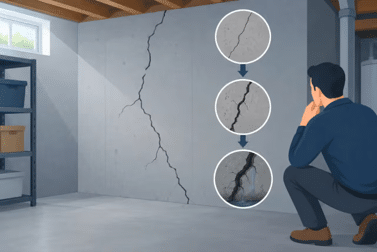
The shape, location, and behavior of a crack tell a more useful story than its appearance alone. A hairline vertical crack in a newer concrete wall may result from normal curing and may remain stable. A wider crack, a crack that changes over time, or a crack accompanied by wall movement deserves closer attention.
Horizontal cracks are among the clearest signs of outside pressure against a basement wall. They often appear along the middle portion of a poured concrete wall, where lateral soil pressure is strongest. If a horizontal crack is widening or the wall is pushing inward along that line, the issue is structural, not simply cosmetic.
Stair-step cracks in block walls can signal movement as well. These cracks follow the mortar joints in a diagonal pattern. They may appear with shifting blocks, crumbling mortar, or an inward bulge. Block walls can deteriorate gradually, so homeowners sometimes grow used to the appearance until the movement becomes unmistakable.
Pay close attention to changes beyond the crack itself. A basement wall that looks curved when viewed from the side, a gap where the wall meets the floor framing, sticking doors or windows above the basement, or new water entering through a crack can all point to ongoing foundation distress.
It is useful to take dated photos and measure a suspicious crack periodically, but do not use monitoring as a reason to delay when the wall is visibly bowing. Movement can progress quietly behind insulation, paneling, storage, or finished basement walls.
The Progression From Crack to Wall Movement
Foundation damage does not follow one exact timeline. Some cracks remain unchanged for years. Others worsen after a season of heavy rainfall, a plumbing leak, a drainage failure, or a period of unusually saturated ground. The key question is whether the crack reflects a stable condition or an active force still acting on the wall.
In the early stage, homeowners may see a narrow crack or minor seepage. As pressure continues, the crack may widen and extend. A wall can then begin to bow inward, especially at its center. If left unsupported, the wall may continue to deflect, creating a greater risk of block displacement, concrete spalling, and loss of structural integrity.
This progression is why early action usually creates more options. A wall with early to moderate movement may qualify for carbon fiber reinforcement. Carbon fiber straps are bonded directly to the interior basement wall to help restrain further inward movement. The finished repair is low-profile, requires no exterior excavation, and can often preserve usable basement space.
Carbon fiber is not a one-size-fits-all answer. A wall with severe displacement, major deterioration, active collapse risk, or underlying footing problems may need a different repair plan. An honest inspection should identify the actual condition of the wall and recommend a solution that fits it, rather than forcing every crack into the same repair method.
When a Crack Needs Immediate Attention
A small, dry, stable vertical crack is different from a structural warning sign. Still, homeowners should not guess when the stakes are the safety and value of the home. Schedule a professional evaluation promptly if you see a horizontal crack, a stair-step crack in block, a bowed or leaning wall, widening gaps, loose blocks, or recurring water entering through the same area.
Act quickly if there is a sudden change after a storm, if a wall appears to move inward noticeably, or if cracks are paired with sagging floors or separation near the top of the wall. These conditions can indicate a more urgent structural concern.
Avoid temporary fixes that hide the evidence. Caulk, paint, and waterproofing coatings may improve appearance or reduce minor moisture entry, but they do not stop outside soil pressure from pushing a wall inward. Likewise, filling a crack without addressing the reason it formed can leave the underlying movement unchecked.
Protect the Wall and the Value of Your Home
Foundation problems affect more than a basement. They affect confidence in the home. Homeowners planning to sell may face questions from buyers, inspectors, and lenders when cracks or bowing walls are visible. Homeowners planning to stay deserve the peace of knowing the structure beneath their living space is properly supported.
A documented repair from a foundation specialist can provide a clearer path forward than an unexplained crack. For qualifying basement walls, professionally installed carbon fiber reinforcement offers a strong, clean alternative to disruptive excavation, bulky steel beams, or wall anchors. It is designed to stabilize the wall from the inside while preserving the look and function of the basement.
At Carbon Fiber Installation LLC, the focus is on identifying whether your wall qualifies for this type of structural reinforcement and explaining the recommendation in plain language. Homeowners in the Columbus, Union County, and Delaware County areas should expect clear answers, minimal disruption, and repair options built around lasting stability. Qualifying installations are backed by a lifetime transferable warranty, giving homeowners added protection now and added confidence when it is time to sell.
Do Not Wait for a Crack to Make the Decision for You
Basement cracks worsen when the forces causing them remain active. Water pressure, saturated soil, freeze-thaw movement, and continuing lateral stress do not pause because a crack has been painted over or covered by shelving. The sooner a changing crack or bowed wall is evaluated, the more likely you are to have a straightforward stabilization option available.
If a basement wall is showing new cracks, widening cracks, or inward movement, arrange a professional inspection before the next heavy rain or winter cycle adds more pressure. A clear diagnosis and the right repair can turn an uncertain warning sign into a stable, protected foundation.
When to Call the Experts at Carbon Fiber Installation, LLC
Don’t wait for problems to worsen. Schedule a free basement wall inspection if you notice:
- New or widening cracks
- Bowing or leaning walls
- Water stains, efflorescence, or musty odors
- Sticking doors/windows or upper-level cracks
We serve the greater Columbus, Ohio area with 24/7 emergency service and a 100% satisfaction guarantee.
Protect Your Home Today
Your foundation supports everything you’ve built. Investing in professional carbon fiber reinforcement from Carbon Fiber Install, LLC is one of the smartest decisions you can make for long-term structural integrity, safety, and peace of mind. It’s a modern, proven solution that stops damage in its tracks while preserving your home’s usability and resale value.
Ready to take action? Contact us today for a free quote or inspection.
- Phone: (740) 436-9316
- Email: info@carbonfiberinstall.com
- Mailing Address: 322 W. 5th Street PMB 110, Marysville, Ohio 43040
Visit www.carbonfiberinstall.com to learn more about our services, view project inspiration, or request service. Don’t let small cracks become big headaches—secure your home’s future with Carbon Fiber Installation, LLC.