

How Carbon Fiber Straps Work on Basement Walls
A basement wall does not need to collapse before it needs attention. A horizontal crack, inward bow, or wall that feels out of line can signal pressure that is already changing the structure of your home. Understanding how carbon fiber straps work gives homeowners a clearer way to evaluate a repair option that is strong, clean, and far less disruptive than many traditional foundation solutions.
Carbon fiber reinforcement is designed to stabilize qualifying basement walls from the inside. Rather than excavating around the house or filling the basement with bulky steel beams, professionally installed straps bond directly to the wall and help resist continued inward movement. For many homes with early to moderate bowing, this can be a permanent path toward greater stability.
How Carbon Fiber Straps Work to Stabilize Walls
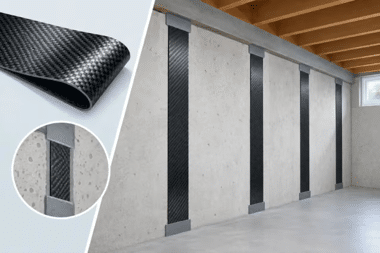
Carbon fiber straps are narrow, high-strength strips made from woven carbon fiber fabric. The material itself is remarkably strong in tension, meaning it is highly resistant to being pulled apart. When it is installed vertically on an interior basement wall with a specialized structural epoxy, the strap becomes part of a reinforcement system that helps hold the wall in position.
The wall is first prepared so the epoxy can form a dependable bond. A technician typically cleans and grinds the installation area, addresses surface irregularities, and applies the engineered epoxy system. The carbon fiber strap is then saturated and pressed firmly into place from the top of the wall down toward the floor. Proper bonding is not a cosmetic detail. It is what allows the strap to transfer force and provide meaningful reinforcement.
Once cured, the strap works by resisting the tension created as outside soil pressure pushes the wall inward. It does not push a bowed wall back into place like a jack or a brace might. Instead, it is intended to stop or significantly limit additional movement when installed on an appropriate wall. That distinction matters. Stabilization protects against worsening damage, while wall straightening is a separate process that may or may not be advisable for a particular structure.
The top of the strap is secured to a strong framing or rim-joist connection, and the bottom is integrated at the slab or wall-to-floor area according to the system design. These connections give the carbon fiber a structural path to resist the forces acting on the wall. The result is a low-profile reinforcement that can often be painted over or finished around after installation.
Why Basement Walls Begin to Bow
Most basement wall movement begins outside the home, even though the warning signs appear indoors. Soil absorbs water, expands, and places lateral pressure against below-grade walls. Heavy rain, poor drainage, snowmelt, and clay-heavy soils can all increase that pressure. Seasonal freezing and thawing can add another layer of stress.
A wall may also be more vulnerable if the backfill around the home was poorly compacted, gutters discharge too close to the foundation, or grading directs water toward the house. Over time, that repeated pressure can produce horizontal cracks, inward bowing, stair-step cracks in block walls, or areas where the wall appears to shear or tilt.
Carbon fiber reinforcement addresses the structural symptom - the wall’s tendency to move inward - but water management still matters. Correcting downspout discharge, drainage concerns, and grading issues helps reduce the forces that contributed to the problem in the first place. The best repair plan looks at both the wall and the conditions surrounding it.
What a Carbon Fiber Strap Repair Can and Cannot Do
For a qualifying wall, carbon fiber offers a powerful combination of strength and minimal disruption. The straps sit nearly flush against the wall, unlike steel I-beams that project into the basement. There is usually no need to excavate the exterior foundation, disturb landscaping, or install large anchor systems across the yard.
That makes carbon fiber especially appealing to homeowners who want to preserve usable basement space. A finished or partially finished basement can often be repaired with less demolition than other methods require. The clean appearance also matters to homeowners preparing to sell, since the repair can be documented without leaving the basement looking like a construction zone.
Still, carbon fiber is not the right answer for every foundation problem. It is generally best suited for poured concrete or block basement walls experiencing limited to moderate inward movement. A wall with severe displacement, crumbling masonry, major settlement, active structural failure, or extensive water damage may need another repair approach. In some cases, a combination of stabilization methods is the responsible recommendation.
A trustworthy inspection should never start with a one-size-fits-all sales pitch. The condition of the wall, the amount of bowing, crack pattern, load conditions, drainage, and the home’s construction all influence what repair is appropriate. The goal is not simply to install straps. The goal is to deliver a repair that protects the home for the long term.
The Installation Process Homeowners Can Expect
One reason carbon fiber is often a smarter solution for qualifying repairs is the efficiency of installation. The work is performed from inside the basement, so homeowners avoid the major excavation, noise, and property disruption associated with exterior foundation work.
After the wall is evaluated and the strap layout is determined, the installation areas are prepared. Surface preparation is followed by epoxy application, strap placement, and securement at the top and bottom of the wall. The epoxy must cure properly before the system reaches its intended performance.
The process is relatively fast, but it should not be rushed. Carbon fiber systems depend on correct spacing, surface preparation, material handling, and anchoring details. A strip of carbon fiber applied to an unprepared wall is not the same as an engineered wall-reinforcement installation. Materials and workmanship both determine whether the repair performs as intended.
After installation, homeowners may be able to paint the repaired wall or build a finished wall in front of it, depending on the design and local requirements. Because the straps are thin, they do not take meaningful space away from the room. That is a practical advantage in basements used for storage, laundry, recreation, or future finishing.
Carbon Fiber vs. Steel Beams and Wall Anchors
Steel beams, wall anchors, and carbon fiber all have a place in foundation repair. The best choice depends on what the wall needs, not on which method sounds most familiar.
Steel beams are visible and can be effective for certain bowing walls, but they consume interior space and may require periodic adjustment depending on the system. Wall anchors can provide significant support and may be appropriate when a wall needs more active correction. They also require access to the exterior yard and can involve digging, landscaping disruption, and visible anchor plates.
Carbon fiber straps provide a cleaner solution when the objective is stabilization rather than major wall realignment. They are extremely low profile, installed from the interior, and do not require yard excavation. For a homeowner dealing with an early-stage bowing wall, that can mean less disruption, a more finished appearance, and a more financially sensible repair.
The trade-off is straightforward: carbon fiber is not designed to solve every degree or type of movement. A proper evaluation determines whether the wall is within the range where this system can deliver lasting results.
Warning Signs That Deserve a Professional Inspection
Do not wait for a crack to become an emergency before asking questions. Horizontal cracks across a basement wall are especially concerning because they often reflect outside pressure. An inward curve, walls that lean at the top, widening cracks, separated trim, or water entering through damaged areas can also indicate movement.
Pay attention to changes over time. A crack that appears stable may be less urgent than one that is growing, but homeowners cannot always judge structural movement by appearance alone. Photographs, measurements, and a professional inspection help establish what is happening and what should be done next.
For homeowners in the Columbus, Union County, and Delaware County areas, Carbon Fiber Installation LLC evaluates basement wall concerns with the goal of recommending the right level of repair - not creating unnecessary disruption. Qualifying carbon fiber repairs are backed by a lifetime transferable warranty, giving homeowners added protection and helping support future resale confidence.
A bowing basement wall is stressful, but the repair decision does not have to be confusing. Get a clear assessment early, address the pressure affecting the wall, and choose a reinforcement system built to keep a manageable problem from becoming a much larger one.
When to Call the Experts at Carbon Fiber Installation, LLC
Don’t wait for problems to worsen. Schedule a free basement wall inspection if you notice:
- New or widening cracks
- Bowing or leaning walls
- Water stains, efflorescence, or musty odors
- Sticking doors/windows or upper-level cracks
We serve the greater Columbus, Ohio area with 24/7 emergency service and a 100% satisfaction guarantee.
Protect Your Home Today
Your foundation supports everything you’ve built. Investing in professional carbon fiber reinforcement from Carbon Fiber Install, LLC is one of the smartest decisions you can make for long-term structural integrity, safety, and peace of mind. It’s a modern, proven solution that stops damage in its tracks while preserving your home’s usability and resale value.
Ready to take action? Contact us today for a free quote or inspection.
- Phone: (740) 436-9316
- Email: info@carbonfiberinstall.com
- Mailing Address: 322 W. 5th Street PMB 110, Marysville, Ohio 43040
Visit www.carbonfiberinstall.com to learn more about our services, view project inspiration, or request service. Don’t let small cracks become big headaches—secure your home’s future with Carbon Fiber Installation, LLC.