

Can Wet Soil Bow Walls? What Homeowners Should Know
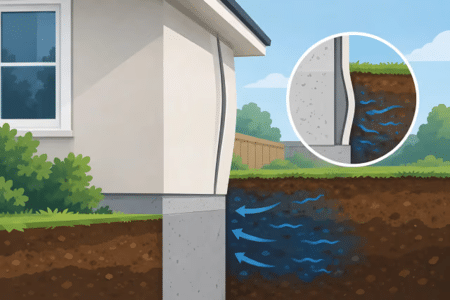
A week of heavy rain can turn a small basement wall crack into a warning you cannot ignore. So, can wet soil bow walls? Yes. Saturated soil is one of the most common forces behind inward basement wall movement, especially in homes with block or poured concrete foundations. The water itself does not usually push a wall inward. The real problem is the pressure wet soil creates against the outside of the foundation.
For homeowners in Columbus, Marysville, and surrounding Central Ohio communities, this pressure can build quickly during wet seasons, snowmelt, or periods when drainage around the home is not working as it should. Understanding what is happening behind your basement wall helps you act before a manageable repair becomes a larger structural problem.
Why Wet Soil Can Bow Basement Walls
Dry soil has weight, but wet soil is substantially heavier. As the ground around your foundation absorbs water, it expands and presses against the basement walls. This is called hydrostatic pressure and lateral soil pressure. Your foundation wall is designed to hold back surrounding earth, but it was not meant to withstand unlimited force from waterlogged soil year after year.
Clay-heavy soils, which are common in many parts of Ohio, make the situation worse. Clay holds water for a long time and expands when saturated. That expansion creates a steady sideways load against the wall. Even when the rain stops, the pressure may remain until the soil dries out.
A basement wall usually does not bow all at once after one storm. More often, repeated wet-dry cycles gradually exploit weak points in the wall. Small cracks widen. Mortar joints begin to separate. A slight inward curve becomes more noticeable over time. By the time a homeowner can clearly see movement, the wall has likely been under pressure for a while.
Signs Wet Soil Is Affecting Your Foundation Walls
Water around a foundation does not always mean a wall is failing. Many homes experience damp soil without structural movement. The concern rises when moisture issues appear alongside physical changes in the basement wall.
Look closely for horizontal cracks, particularly across the middle third of a block wall. Horizontal cracking is often a sign that outside pressure is pushing inward. Stair-step cracks along mortar joints, vertical cracks that grow wider, or a wall that appears to curve into the basement also deserve prompt attention.
Other clues can include white mineral staining, damp spots, peeling paint, loose block faces, or water entering through cracks after storms. You may also notice that doors near the basement no longer close properly, although that symptom can have several causes. A musty basement alone is not proof of bowing, but it can point to a drainage issue that is contributing to the problem.
One simple check is to stand at one end of the wall and look along its surface. A bowed wall may show an inward curve that is easier to see from an angle. Do not rely on appearance alone, though. A professional inspection can measure the degree of movement and determine whether it is active, stable, or getting worse.
Drainage Matters, but It May Not Straighten a Bowed Wall
Correcting drainage is an essential part of protecting a foundation. Clean gutters, properly extended downspouts, and grading that slopes away from the house can reduce the amount of water collecting beside basement walls. Repairing leaking exterior plumbing and keeping sump systems functional can also help control moisture around the home.
But drainage improvements do not reverse wall movement that has already occurred. Once a wall has cracked or bowed, it may remain vulnerable even after the ground dries. The wall needs to be evaluated on its own structural condition, not just on whether the basement looks dry today.
This is where homeowners can lose valuable time. They may solve a gutter problem, see less water in the basement, and assume the foundation issue is gone. Meanwhile, the existing crack or inward deflection remains. The next extended wet period can apply pressure to a wall that is already weakened.
When a Bowing Wall Needs Structural Repair
A slight crack does not always require the same repair as a significantly bowed wall. The right solution depends on the wall material, crack pattern, amount of movement, source of pressure, and whether the wall is continuing to move.
For early to moderate inward movement, carbon fiber wall reinforcement can be a highly effective solution. Carbon fiber straps are bonded directly to the interior face of the foundation wall and secured at the top and bottom. Once installed, the system creates a powerful restraint that helps prevent further inward movement without taking up usable basement space.
Unlike steel beams, carbon fiber is low-profile and does not leave a bulky obstruction along the wall. Unlike exterior excavation, installation is completed from inside the basement in many qualifying cases, avoiding the disruption of digging around landscaping, driveways, decks, or sidewalks. The goal is not to cover up a crack. It is to stabilize the wall with a system designed for the structural demand.
Carbon fiber is not the answer for every foundation problem. A wall with severe displacement, crumbling masonry, active collapse, or extensive footing failure may require a different approach. That is why a clear inspection matters. A trustworthy repair recommendation should match the actual condition of the wall, not force every home into the same expensive solution.
Do Not Wait for a Wall to Become an Emergency
Foundation movement rarely improves on its own. Wet soil pressure may ease temporarily during dry weather, but the cycle returns with the next round of rain or snowmelt. Each cycle can add stress to a cracked or bowed wall.
Waiting also limits your repair options. A wall caught early may qualify for a clean, efficient reinforcement system. A wall allowed to move farther can require more invasive work, more time, and more expense. Beyond repair costs, visible foundation concerns can complicate a home sale and create understandable worry for buyers.
If you are planning to finish your basement, sell your home, or simply protect the home your family relies on, now is the time to get answers. A professional assessment should explain what caused the movement, how serious it is, and what repair will provide lasting stability. You should never be pressured into a one-size-fits-all fix.
What to Do After Heavy Rain
After prolonged rain, walk around the outside of your home and look for water pooling near the foundation, overflowing gutters, disconnected downspouts, or soil that slopes toward the house. Inside, inspect basement walls for new moisture, fresh cracking, or changes to cracks you have already noticed.
Take clear photos and note the date. This documentation can help identify whether a crack is changing over time. Avoid patching a significant crack before it has been evaluated. Cosmetic sealants may hide evidence of movement without addressing the force causing it.
If a wall is visibly bowing, has a horizontal crack, or appears to be moving inward, schedule a foundation inspection promptly. Carbon Fiber Installation LLC helps homeowners identify qualifying wall issues and install engineered carbon fiber reinforcement with minimal disruption. A properly installed system can provide the strength, stability, and long-term protection a vulnerable basement wall needs.
Wet soil is part of life in Ohio. A bowed wall does not have to become part of yours. Address the water source, get the structure evaluated, and choose a repair that protects your home before the next wet season puts more pressure on it.
When to Call the Experts at Carbon Fiber Installation, LLC
Don’t wait for problems to worsen. Schedule a free basement wall inspection if you notice:
- New or widening cracks
- Bowing or leaning walls
- Water stains, efflorescence, or musty odors
- Sticking doors/windows or upper-level cracks
We serve the greater Columbus, Ohio area with 24/7 emergency service and a 100% satisfaction guarantee.
Protect Your Home Today
Your foundation supports everything you’ve built. Investing in professional carbon fiber reinforcement from Carbon Fiber Install, LLC is one of the smartest decisions you can make for long-term structural integrity, safety, and peace of mind. It’s a modern, proven solution that stops damage in its tracks while preserving your home’s usability and resale value.
Ready to take action? Contact us today for a free quote or inspection.
- Phone: (740) 436-9316
- Email: info@carbonfiberinstall.com
- Mailing Address: 322 W. 5th Street PMB 110, Marysville, Ohio 43040
Visit www.carbonfiberinstall.com to learn more about our services, view project inspiration, or request service. Don’t let small cracks become big headaches—secure your home’s future with Carbon Fiber Installation, LLC.