

Bowing Wall Stabilization Before After Results
A bowed basement wall rarely starts with a dramatic failure. It often begins as a thin horizontal crack, a slight inward curve, or a wall that no longer looks straight when viewed from the side. Seeing bowing wall stabilization before after results helps homeowners understand what a real repair changes - and what it cannot change after years of soil pressure have pushed against the foundation.
The most reassuring part of a properly designed carbon fiber repair is not a cosmetic cover-up. It is the added structural restraint. Carbon fiber reinforcement is installed to help stop qualifying basement walls from continuing to move inward, protecting the foundation from progressive damage without turning your yard into an excavation project.
What a Bowing Wall Looks Like Before Stabilization
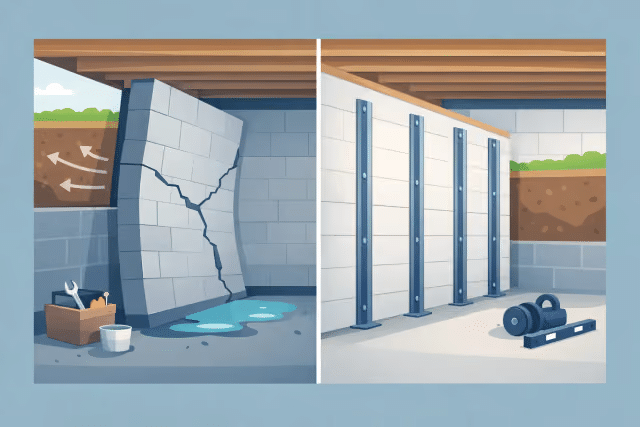
Before stabilization, a basement wall may show one warning sign or several at once. Horizontal cracks are common, especially near the middle third of a concrete block wall. You may also notice stair-step cracks along mortar joints, water entering through cracks, flaking block faces, or a visible inward bow when you sight down the wall.
Ohio homes are particularly vulnerable to seasonal soil changes. Heavy rain, poor drainage, expanding clay soils, and freeze-thaw cycles can create repeated pressure against foundation walls. Over time, that exterior pressure can force a wall inward. The wall may remain standing, but it is no longer performing the way it should.
A wall that is bowing does not always mean the home needs excavation, wall anchors, or steel beams. Those methods have a place in serious structural situations. But early to moderate movement often qualifies for a less invasive solution: professionally installed carbon fiber reinforcement.
The key is an honest inspection. The degree of bowing, crack pattern, wall material, moisture conditions, and evidence of ongoing movement all matter. A repair plan should address the actual condition of the wall rather than apply the most expensive method by default.
Bowing Wall Stabilization Before After: What Actually Changes
The "before" and "after" difference is usually more meaningful than a fresh-looking basement wall. After carbon fiber stabilization, homeowners gain a wall that has been reinforced against continued inward movement.
Carbon fiber straps are bonded vertically to the interior face of the foundation wall using high-strength structural epoxy. Once cured, the system becomes extremely strong in tension. It helps distribute force and restrain the wall where soil pressure has caused cracking or bowing.
A completed installation is low profile and clean. Unlike steel I-beams, carbon fiber reinforcement does not take up valuable basement floor space. Unlike exterior excavation, the work is performed from inside the basement, so landscaping, driveways, patios, and utilities are usually left undisturbed.
However, a truthful before-and-after discussion includes an important distinction: stabilization is not always wall straightening. If a wall has already bowed inward, carbon fiber is designed to secure it in its current position and prevent further movement when the wall qualifies. It does not typically push a severely displaced wall back into place.
That is often the smartest outcome. Forcing a damaged wall back too aggressively can create additional stress. Stabilizing a qualifying wall protects the structure, limits disruption, and provides a permanent reinforcement solution without unnecessary work.
Before: Cracks, Movement, and Uncertainty
Before repair, homeowners often feel stuck between two fears: ignoring the problem and overpaying for a repair they may not need. Foundation cracks can make a basement feel unsafe, and a home inspection report can create pressure when a sale is pending.
The uncertainty tends to worsen when signs are left alone. Soil pressure does not correct itself. A horizontal crack may widen. Water may find a path through weakened joints. A wall that has moved slightly may continue moving as outside conditions change.
After: Reinforcement, Protection, and a Clear Record of Repair
After stabilization, the wall has a proven reinforcement system installed over the affected area. The repair can be documented for your records, which is valuable for homeowners planning to stay and for sellers who need to demonstrate that a known structural concern was professionally addressed.
A warranty-backed installation also matters. A lifetime transferable warranty can give future buyers greater confidence than an unexplained crack repair or a do-it-yourself patch. It shows that the repair was made to protect the home for the long term, not simply to improve its appearance for a showing.
Why Carbon Fiber Is Often the Better First Option
Traditional repair methods can be effective, but they are not automatically the right fit for every bowed basement wall. Exterior excavation can be disruptive and costly. It may require removing landscaping, digging near the foundation, and restoring the area after work is complete. Steel beams can consume basement space and may not offer the clean finish homeowners want in a finished or usable basement.
Carbon fiber wall reinforcement offers a different path for qualifying conditions. The system is engineered for strength, installed on the interior, and designed to remain discreet. It is also a practical choice when homeowners want to resolve the structural issue without creating a major construction project around the home.
That said, carbon fiber is not a shortcut for every foundation problem. A wall with severe displacement, active collapse, extensive deterioration, or conditions that require straightening may need a different structural approach. The right contractor explains that clearly. Permanent repairs begin with matching the method to the problem.
What Makes the Results Last
Carbon fiber is only as effective as the inspection and installation behind it. The wall surface must be properly prepared, cracks must be evaluated, and the reinforcement must be installed according to the system's specifications. Rushing surface preparation or treating every crack as identical can compromise a repair.
The conditions outside the wall matter too. Stabilization addresses the wall's ability to resist movement, but water management still deserves attention. Keep gutters clean, extend downspouts away from the foundation, correct grading that slopes toward the house, and address persistent water issues in or around the basement.
These steps are not a substitute for structural reinforcement when a wall is already bowing. They are part of protecting the repair and reducing the pressure that contributed to the problem.
When to Schedule a Foundation Inspection
Do not wait for a crack to become an emergency. A professional evaluation is warranted when you see a horizontal foundation crack, a basement wall that appears curved inward, widening mortar joints, recurring water through the same wall, or doors and windows above the basement that have begun sticking unexpectedly.
Photographs taken over several months can help show whether a crack is changing, but you do not need to diagnose the problem yourself before calling. A specialist should measure the wall, assess the movement, and explain whether carbon fiber stabilization is appropriate.
For homeowners in the Columbus, Union County, and Delaware County areas, Carbon Fiber Installation LLC provides clear answers without pushing unnecessary excavation or oversized repairs. You should know what your wall needs, why it needs it, and what results to expect before any work begins.
A bowed wall can feel overwhelming when you first notice it. The practical next step is simple: have it inspected while the repair options are still broad, the disruption can remain low, and protecting your home is more affordable than waiting for movement to worsen.
When to Call the Experts at Carbon Fiber Installation, LLC
Don’t wait for problems to worsen. Schedule a free basement wall inspection if you notice:
- New or widening cracks
- Bowing or leaning walls
- Water stains, efflorescence, or musty odors
- Sticking doors/windows or upper-level cracks
We serve the greater Columbus, Ohio area with 24/7 emergency service and a 100% satisfaction guarantee.
Protect Your Home Today
Your foundation supports everything you’ve built. Investing in professional carbon fiber reinforcement from Carbon Fiber Install, LLC is one of the smartest decisions you can make for long-term structural integrity, safety, and peace of mind. It’s a modern, proven solution that stops damage in its tracks while preserving your home’s usability and resale value.
Ready to take action? Contact us today for a free quote or inspection.
- Phone: (740) 436-9316
- Email: info@carbonfiberinstall.com
- Mailing Address: 322 W. 5th Street PMB 110, Marysville, Ohio 43040
Visit www.carbonfiberinstall.com to learn more about our services, view project inspiration, or request service. Don’t let small cracks become big headaches—secure your home’s future with Carbon Fiber Installation, LLC.