

Can Carbon Fiber Stop Movement in Basement Walls?
A basement wall that is starting to bow inward can make every heavy rain feel like a threat to your home. Homeowners often ask, can carbon fiber stop movement before a wall becomes a major structural repair? In many qualifying cases, yes. Properly installed carbon fiber wall reinforcement can restrain further inward movement and stabilize a foundation wall without the disruption of exterior excavation or bulky interior steel beams.
The key is acting while the wall is still a good candidate for reinforcement. Carbon fiber is an exceptionally strong solution for early to moderate foundation wall movement, but it is not a one-size-fits-all answer for every damaged basement.
Can Carbon Fiber Stop Movement in a Bowing Wall?
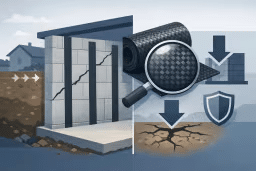
Carbon fiber can stop or significantly restrict future inward movement in a basement wall when it is installed as part of an engineered reinforcement system. Carbon fiber straps are bonded vertically from the foundation wall to the framing structure above. Once cured, the system helps resist the lateral pressure pushing the wall inward.
That distinction matters. Carbon fiber reinforcement is designed to stabilize the wall where it is. It does not normally pull a bowed wall back to its original position. Trying to force a damaged masonry wall outward can create additional stress and cracking. A reliable repair focuses first on preventing the problem from progressing.
For many homeowners, stopping the movement is the most important outcome. A wall that continues to move can lead to wider cracks, water entry, damaged finishes, sticking doors above the basement, and a more complicated repair later. Stabilizing it early protects the structure and helps preserve the value of the home.
Why Basement Walls Move Inward
Most basement wall movement begins outside the home. Soil absorbs water, expands, and presses against the foundation. In Ohio, the freeze-thaw cycle can add more pressure as wet soil freezes and shifts. Poor grading, clogged gutters, short downspouts, and saturated soil can all make that pressure worse.
Concrete block walls are especially vulnerable because their mortar joints create natural lines of weakness. Over time, outside pressure may cause horizontal cracks, stair-step cracks, or a noticeable inward curve near the center of the wall. Poured concrete walls can also crack and bow when lateral soil pressure exceeds what the wall can handle.
Carbon fiber does not eliminate the soil pressure outside. Instead, it reinforces the wall so the wall can better resist that pressure. That is why a professional assessment should also include practical water-management recommendations, such as correcting drainage and directing roof runoff away from the foundation.
When Carbon Fiber Is the Right Repair
Carbon fiber is often a strong fit when a basement wall has visible cracking or inward deflection but remains structurally sound enough to be reinforced. It is particularly effective for walls that are beginning to bow, have horizontal cracks, or show early signs of pressure-related movement.
The best candidates generally have movement that is active or likely to continue, but not so severe that the wall is unstable, heavily displaced, or deteriorating. The wall surface also needs to be prepared correctly so the adhesive system can create a dependable bond.
A qualified installer will look at the wall material, crack pattern, degree of bowing, moisture conditions, floor framing, and the source of outside pressure. That inspection is not a sales formality. It determines whether carbon fiber will provide the long-term stabilization the wall needs.
For homeowners in the Columbus area, Union County, and Delaware County, that evaluation is especially valuable because local soil conditions, drainage patterns, and seasonal weather can all affect foundation performance.
What the Installation Process Looks Like
One reason homeowners choose carbon fiber is that the repair can usually be completed from inside the basement. There is no need to excavate landscaping around the foundation in many qualifying situations.
The installation begins with preparing the wall. Damaged coatings, loose material, and surface contaminants are removed so the carbon fiber system can bond directly to a solid surface. Cracks may be repaired as appropriate before the straps are installed.
Next, high-strength epoxy is applied and carbon fiber straps are placed vertically at engineered intervals. The straps are connected at the top to the home’s framing structure, creating a continuous reinforcement path that helps hold the wall against future inward pressure. After curing, the system has a low-profile appearance that does not take up usable basement space.
Unlike steel beams, carbon fiber does not rust. Unlike wall anchors, it typically does not require exterior yard excavation. It can also be painted or covered after installation, making it a practical choice for finished or partially finished basements.
What Carbon Fiber Cannot Fix
A trustworthy foundation repair company should be clear about the limits of carbon fiber. It is a stabilizing system, not a cosmetic patch or a cure for every type of foundation failure.
Carbon fiber may not be the right standalone repair when a wall has severe displacement, significant crumbling or block deterioration, a failing footing, major settlement, or an immediate risk of collapse. A wall that has shifted dramatically may need a different structural approach before reinforcement can be considered.
It also does not solve a water problem by itself. If water is collecting against the foundation because of poor drainage, the pressure that caused the movement may continue. Reinforcing the wall while ignoring obvious drainage failures is not the complete answer.
Finally, carbon fiber does not make an active structural concern safe to ignore. If you see a new horizontal crack, a wall that appears more bowed than before, separated walls, or shifting framing above the basement, arrange an inspection promptly. The earlier the condition is evaluated, the more repair options may be available.
Carbon Fiber vs. Steel Beams and Wall Anchors
Steel beams, wall anchors, and carbon fiber each have a place in foundation repair. The right choice depends on the wall and the home, not on which system sounds strongest in an advertisement.
Steel beams can provide substantial support, but they are visible and take up space along the wall. They may be a reasonable option for more advanced movement or conditions that require a different load path. Wall anchors can stabilize and, in some cases, gradually improve wall position, but they often require excavation or access to suitable soil outside the foundation.
Carbon fiber is frequently preferred for qualifying early-to-moderate bowing because it is strong, non-invasive, and nearly flush with the wall. It can deliver lasting reinforcement without turning the basement into a construction zone. The trade-off is simple: it must be used on the right wall, at the right stage of movement, with proper surface preparation and installation.
Protecting Your Home Before Movement Gets Worse
Foundation trouble rarely improves on its own. A small horizontal crack can become a bowed wall, and a bowed wall can become a much larger expense if it is left to move season after season. Waiting for visible failure is not a cost-saving strategy.
If your basement wall has cracks, inward bowing, or signs of soil pressure, schedule a professional inspection before choosing a repair. Ask what is causing the movement, whether the wall qualifies for carbon fiber reinforcement, what drainage corrections are recommended, and how the proposed repair is warranted.
Carbon Fiber Installation LLC provides homeowners with a clear assessment and a low-disruption path to stabilization when carbon fiber is the right fit. A properly designed repair, backed by strong warranty protection, can replace uncertainty with a stable wall and a safer home.
Your basement walls support more than soil pressure. They support the home and the life built above them. Addressing movement while a clean, durable reinforcement option is still available is one of the smartest ways to protect both.
When to Call the Experts at Carbon Fiber Installation, LLC
Don’t wait for problems to worsen. Schedule a free basement wall inspection if you notice:
- New or widening cracks
- Bowing or leaning walls
- Water stains, efflorescence, or musty odors
- Sticking doors/windows or upper-level cracks
We serve the greater Columbus, Ohio area with 24/7 emergency service and a 100% satisfaction guarantee.
Protect Your Home Today
Your foundation supports everything you’ve built. Investing in professional carbon fiber reinforcement from Carbon Fiber Install, LLC is one of the smartest decisions you can make for long-term structural integrity, safety, and peace of mind. It’s a modern, proven solution that stops damage in its tracks while preserving your home’s usability and resale value.
Ready to take action? Contact us today for a free quote or inspection.
- Phone: (740) 436-9316
- Email: info@carbonfiberinstall.com
- Mailing Address: 322 W. 5th Street PMB 110, Marysville, Ohio 43040
Visit www.carbonfiberinstall.com to learn more about our services, view project inspiration, or request service. Don’t let small cracks become big headaches—secure your home’s future with Carbon Fiber Installation, LLC.