

How Much to Fix Bowing Basement Walls?
A basement wall does not start bowing all at once. It usually begins with a horizontal crack, a slight inward curve, or that uneasy feeling that something looks off near the middle of the wall. When homeowners ask how much to fix bowing basement walls, they are usually asking two things at once - what will this cost, and how bad is this going to get if I wait?
The honest answer is that price depends on the severity of movement, the repair method, and how early the problem is caught. But in many homes, especially when wall movement is still in the early to moderate stage, the right repair can be much more affordable and far less disruptive than people expect.
How much to fix bowing basement walls depends on the repair method
There is no single price that applies to every bowed wall because not every wall needs the same level of correction. A wall that has started to move inward by less than 2 inches is a very different project from a wall that is heavily displaced, cracking in multiple areas, or failing under serious soil pressure.
In general, homeowners may see repair costs range from a few thousand dollars for a targeted reinforcement system to significantly more for major structural correction involving excavation, steel systems, or wall rebuilding. The method matters because it affects labor, materials, installation time, and the amount of disruption to the property.
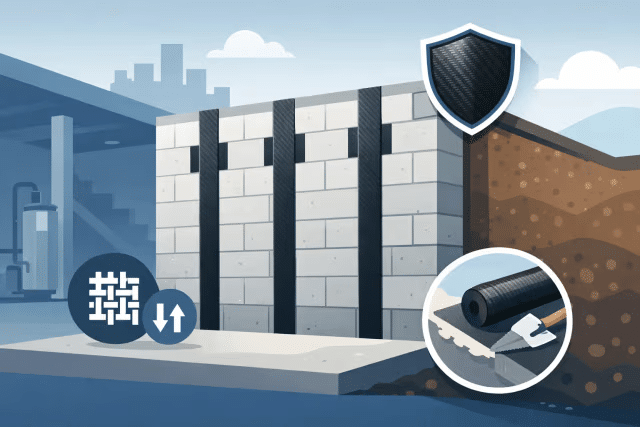
Carbon fiber reinforcement is often one of the most cost-effective options for qualifying walls. It is designed to stabilize bowing basement walls without the need for exterior excavation or bulky interior beam systems. That usually means lower labor costs, faster installation, and less mess inside and outside the home.
Steel I-beams and wall anchors can also be effective in some situations, but they are often more invasive. Wall anchors require excavation in the yard. Steel beams take up interior space and may involve more visible hardware. Those systems can make sense for certain structural conditions, but they are not always the smartest first choice for early to moderate wall movement.
Typical cost ranges homeowners should expect
For early-stage bowing or inward wall movement, carbon fiber repairs often fall in the lower end of the overall pricing spectrum compared with more invasive structural options. Many homeowners pay several thousand dollars, depending on wall length, number of straps needed, access conditions, and whether crack repair or waterproofing steps are also recommended.
Once the wall movement becomes more severe, costs tend to rise quickly. If a wall needs excavation, anchoring, partial rebuilding, or complete replacement, the project can move well beyond what most homeowners expect when they first notice the problem. That is why timing matters so much. Stabilizing a wall early is usually far more affordable than waiting until the structure has lost significant integrity.
A contractor who specializes in bowing wall stabilization should inspect the actual amount of deflection, the crack pattern, and the cause of pressure against the wall before giving a quote. Broad online price estimates can be useful for planning, but they are not a substitute for a real structural assessment.
What affects the cost of fixing a bowing basement wall
The biggest cost factor is severity. A wall with minor inward movement and no major separation at the top or bottom is often a good candidate for carbon fiber reinforcement. A wall that has moved dramatically, is shearing, or is close to collapse may require a much more aggressive repair.
Wall length also affects pricing. A short section with isolated movement will cost less than a long foundation wall that needs reinforcement across a wide span. The number of reinforcement points matters too. More wall straps, beams, or anchors means more material and labor.
The cause of the movement can change the repair scope. Expansive clay soil, poor drainage, hydrostatic pressure, freeze-thaw cycles, and gutter discharge near the foundation can all contribute to wall stress. If those issues are not addressed, even a strong structural repair can be put under ongoing pressure.
Finish conditions inside the basement can add cost as well. If drywall, paneling, shelving, or finished surfaces need to be removed or worked around, labor becomes more involved. Access issues outside the home can also affect methods that require excavation.
Finally, warranty coverage and the quality of the system matter. A lower quote is not always the better value if it comes with limited protection or a repair method that does not fit the actual wall condition. Homeowners are not just paying for material. They are paying for long-term stability, clean installation, and confidence that the problem is being handled correctly.
When carbon fiber is the smart value
Carbon fiber is not the answer for every damaged foundation wall. But when the wall is structurally sound enough to be reinforced rather than rebuilt, it offers a strong value proposition.
It is especially effective for poured concrete or concrete block basement walls showing early to moderate inward movement. Carbon fiber straps bond directly to the wall and create a high-strength reinforcement system designed to stop further bowing. Because the installation is low profile, it does not steal usable basement space the way steel beams can.
For many homeowners, the biggest advantage is what does not happen. There is usually no major excavation, no torn-up yard, and no drawn-out construction process. That reduces disruption and often lowers the overall project cost. It also makes the repair easier to live with if the basement is used for storage, laundry, or future finishing.
A properly installed engineered carbon fiber system can also come with a lifetime transferable warranty, which matters not just for peace of mind today but for resale later. Buyers want proof that a structural issue was professionally addressed. A documented, warrantied repair is much easier to stand behind than a patchwork fix.
How to tell if your wall needs immediate attention
Price should never be the only question. The more urgent question is whether the wall is actively failing.
Warning signs include horizontal cracking, stair-step cracks in block walls, inward bulging, water intrusion through cracks, separation where the wall meets floor joists, and doors or windows above the basement that begin sticking for no clear reason. If the wall looks visibly bowed or the crack width appears to be increasing, that is the time to act.
Waiting rarely saves money. Bowing walls are pressure problems, not cosmetic problems. The lateral load from surrounding soil does not go away on its own. Once a wall starts moving, it typically continues unless that pressure is managed and the structure is reinforced.
That does not mean every bowed wall is a crisis requiring the most expensive repair available. It means the wall should be inspected by a specialist who can match the repair to the actual condition. Homeowners often spend more than necessary when they get pushed toward heavy structural work that may not be required. They also risk major future costs when they ignore early warning signs.
The real question is value, not just price
If you are comparing estimates, focus on what the repair is designed to do. Is it meant to stop further movement, straighten the wall, or support a severely compromised structure? Is the method appropriate for the level of damage? Is the installation clean and low disruption? Is there a real warranty behind it?
Those questions matter because the cheapest option upfront is not always the lowest cost over time. A low bid that does not solve the underlying structural issue can leave you paying twice. On the other hand, a repair that is engineered for the wall condition, installed by a specialist, and backed by a transferable lifetime warranty gives you far more than a price tag. It gives you protection.
That is why many homeowners in Marysville and surrounding areas choose specialist repair companies like Carbon Fiber Installation LLC when basement walls start moving. They want a clear answer, a proven system, and a repair built to last without turning their property into a construction zone.
If you have noticed inward movement, cracking, or bowing, the most cost-effective step is usually the one you take first. Get the wall inspected while reinforcement is still on the table. A strong repair completed early is often the difference between a manageable project and a much more expensive structural problem later. Call Carbon Fiber Installation LLC 740-436-9316
When to Call the Experts at Carbon Fiber Installation, LLC
Don’t wait for problems to worsen. Schedule a free basement wall inspection if you notice:
- New or widening cracks
- Bowing or leaning walls
- Water stains, efflorescence, or musty odors
- Sticking doors/windows or upper-level cracks
We serve the greater Columbus, Ohio area with 24/7 emergency service and a 100% satisfaction guarantee.
Protect Your Home Today
Your foundation supports everything you’ve built. Investing in professional carbon fiber reinforcement from Carbon Fiber Install, LLC is one of the smartest decisions you can make for long-term structural integrity, safety, and peace of mind. It’s a modern, proven solution that stops damage in its tracks while preserving your home’s usability and resale value.
Ready to take action? Contact us today for a free quote or inspection.
- Phone: (740) 436-9316
- Email: info@carbonfiberinstall.com
- Mailing Address: 322 W. 5th Street PMB 110, Marysville, Ohio 43040
Visit www.carbonfiberinstall.com to learn more about our services, view project inspiration, or request service. Don’t let small cracks become big headaches—secure your home’s future with Carbon Fiber Installation, LLC.