

Non-Invasive Foundation Repair Methods
A basement wall does not have to cave in before it becomes a serious problem. If you are seeing horizontal cracks, inward bowing, or signs that a wall is starting to shift, the right noninvasive foundation repair methods can stop that movement before it turns into a far more expensive structural failure.
For many homeowners, the fear is not just the damage. It is the repair process itself. People picture heavy excavation, torn-up landscaping, long construction timelines, and a price tag that keeps climbing. That is exactly why non-invasive options have become such a practical solution for early to moderate foundation problems, especially when the issue involves basement wall movement rather than total foundation collapse.
What non-invasive foundation repair methods actually mean
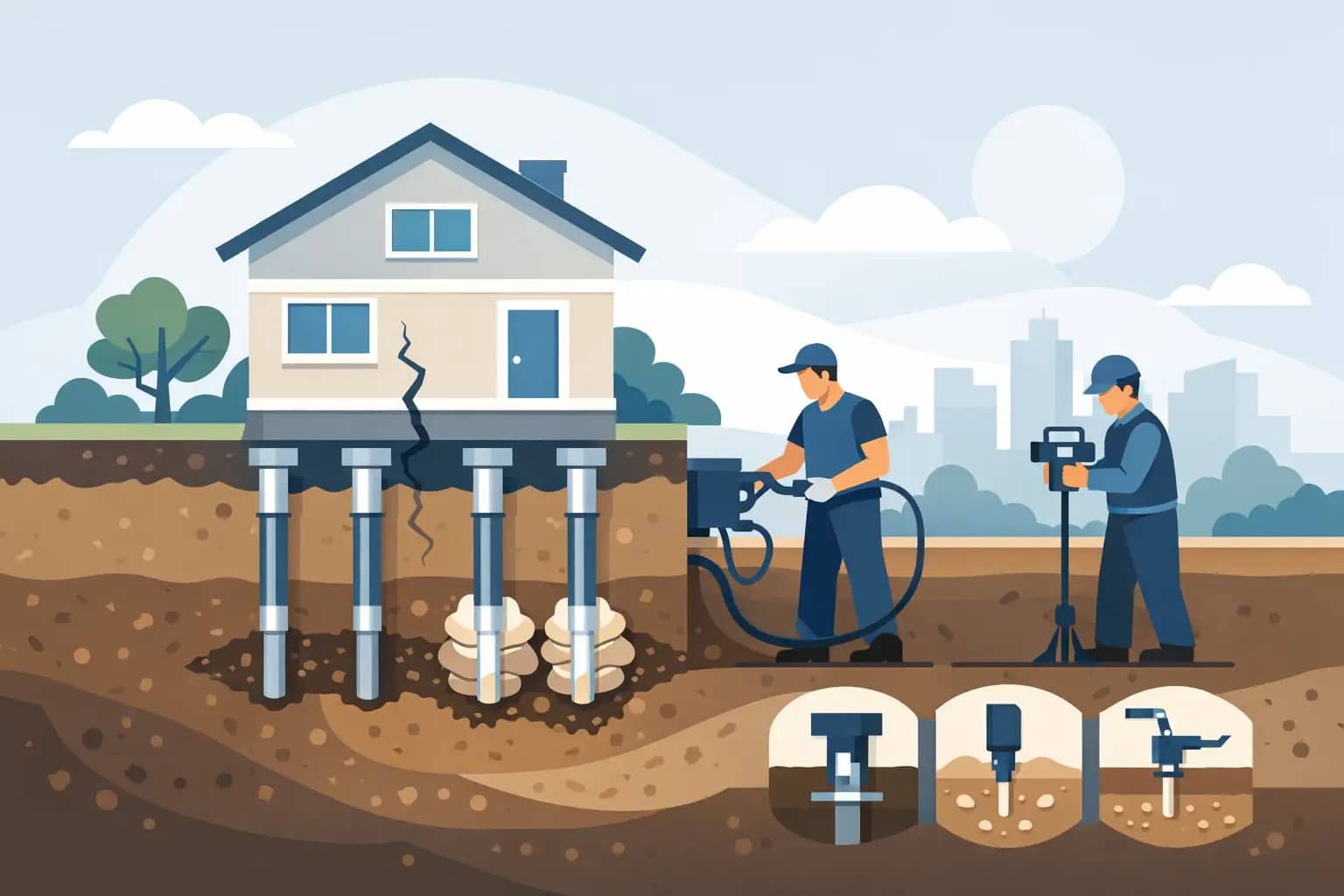
In plain terms, non-invasive foundation repair methods are solutions that strengthen and stabilize the structure without major digging, extensive demolition, or large-scale disruption to your property. The goal is to correct or stop the problem from worsening while preserving as much of the home and surrounding area as possible.
That does not mean every repair is simple, and it does not mean every foundation problem qualifies. If a wall is severely displaced, if footing failure is involved, or if there is advanced structural deterioration, a more aggressive repair may still be necessary. But for many basement wall issues, especially when caught early, non-invasive repairs are not just a lighter option. They are often the smarter one.
Why homeowners look for less disruptive repairs
Foundation problems create stress fast. Once you notice a bowed wall or a crack that keeps growing, every storm and every season starts to feel like a threat. At the same time, most homeowners are trying to avoid turning a structural repair into a full property restoration project.
That is where low-disruption methods stand out. They typically reduce labor, preserve driveways and landscaping, shorten installation time, and make it easier to stay in your home during the work. They can also be more affordable than traditional systems that rely on excavation or bulky interior framing.
There is another practical benefit. Repairs that are clean, engineered, and backed by a strong warranty can also help protect resale value. Buyers and inspectors want to see that the issue was handled professionally, not patched cosmetically.
The most common non-invasive foundation repair methods
Not all foundation problems are the same, so the right method depends on the type of movement, the wall material, and how advanced the issue has become.
Carbon fiber wall reinforcement
For bowed, cracked, or shifting basement walls, carbon fiber reinforcement is one of the most effective non-invasive solutions available. Carbon fiber straps are bonded directly to the interior face of the wall using high-strength structural epoxy. Once installed, they create a powerful reinforcement system designed to resist further inward movement.
The biggest advantage is strength without bulk. Carbon fiber is extremely strong, but it sits nearly flush to the wall. That means no large steel beams projecting into your basement and no excavation around the outside of the home in qualifying cases. The installation is fast, clean, and built for long-term stabilization.
This method works best when wall movement is still within an acceptable range and the wall can be stabilized in place. It is designed to stop further bowing, not push a badly failed wall back to its original position. That distinction matters. A trustworthy specialist should tell you whether your wall qualifies.
Epoxy and crack injection repair
When the issue is a foundation wall crack rather than broad structural bowing, injection repair may be the right fit. Epoxy injections are commonly used to restore structural continuity in poured concrete walls, while polyurethane injections are often used more for water sealing than structural reinforcement.
This approach is minimally disruptive and highly targeted. It seals the crack from within and can help prevent moisture intrusion while strengthening the affected area, depending on the material used and the crack type.
Still, crack injection is not a cure-all. If the crack is a symptom of ongoing movement, the wall may need reinforcement in addition to sealing. Otherwise, you are treating the opening without addressing the pressure causing it.
Interior wall bracing systems
Some basement walls need more support than a surface-bonded repair alone can provide, but still do not require excavation. In those cases, interior bracing systems may be used to stabilize the wall from inside the basement.
These systems vary, and some are more intrusive than others. Steel I-beams, for example, can provide strong support but take up usable basement space and create a more industrial look. They are effective in certain situations, but they are not as clean or low-profile as carbon fiber.
For homeowners who value a finished appearance, open floor space, and minimal disruption, interior bracing may feel like a compromise. It can be the right compromise in some cases, but it is worth understanding what you gain and what you give up.
Why carbon fiber stands out
When homeowners compare non-invasive foundation repair methods, carbon fiber often rises to the top for one reason: it solves a real structural problem without creating a new set of headaches.
It is strong, engineered for reinforcement, and installed from the inside. There is no need to tear up the yard in qualifying applications. There are no bulky beams changing how the basement looks or functions. And because the installation is relatively quick, the process is easier on your schedule and your budget.
That is especially important for homeowners dealing with early warning signs. If the wall is already bowing slightly or showing horizontal cracking, waiting can push the problem into a category that demands a more invasive and expensive repair. Acting early keeps more options on the table.
For residential basement wall stabilization, that is where a specialist makes the difference. A company focused on these structural conditions can tell the difference between a wall that can be reinforced efficiently and one that needs a different repair path.
When non-invasive methods may not be enough
A confident contractor should never pretend every problem can be solved with one system. Some cannot.
If a foundation wall has severe displacement, advanced material breakdown, settlement tied to broader foundation failure, or drainage conditions that are causing major soil pressure beyond what the wall can handle, a non-invasive repair may not be enough on its own. In some situations, drainage correction, exterior pressure relief, or structural rebuilding may be necessary.
That does not make non-invasive methods less valuable. It just means proper diagnosis comes first. The best repair is the one that fits the actual condition of the home, not the one that sounds easiest in a sales pitch.
What to look for before you choose a repair method
Homeowners do not need to become structural experts, but they should know what separates a sound recommendation from a rushed estimate.
First, look for a contractor who explains the cause of the damage clearly. You should understand whether the issue is lateral pressure, water intrusion, settlement, or a combination of factors. Second, ask whether the proposed repair is meant to stop movement, restore strength, prevent water, or all three. Those are different goals.
Third, pay attention to how the company stands behind the work. A lifetime transferable warranty carries real value because it protects your investment and can strengthen confidence if you sell the home later. Clear guarantees, documented systems, and specialization matter.
For homeowners in the Columbus area, where basements are common and soil pressure can create recurring wall issues, this is not the kind of project to hand off to a generalist who treats foundation repair as a side service. You want a specialist focused on basement wall stabilization and long-term structural performance.
The best time to repair is earlier than you think
Foundation problems rarely get cheaper by waiting. A small bow can become a larger one. A single crack can grow into a pattern of movement. What starts as a clean interior reinforcement job can eventually turn into a larger structural project with far more disruption.
That is why non-invasive repair is so valuable. It gives homeowners a way to address the problem before the house and the budget both take a bigger hit. When the wall still qualifies, you can secure it with a system built for strength, stability, and lasting protection.
If you are seeing warning signs in your basement, the next step is not panic. It is getting a clear inspection from a specialist who knows which walls can be stabilized cleanly and which ones need a different path. Strong repairs start with honest answers, and the right solution should leave you with more confidence in your home, not more disruption around it.
When to Call the Experts at Carbon Fiber Installation, LLC
Don’t wait for problems to worsen. Schedule a free basement wall inspection if you notice:
- New or widening cracks
- Bowing or leaning walls
- Water stains, efflorescence, or musty odors
- Sticking doors/windows or upper-level cracks
We serve the greater Columbus, Ohio area with 24/7 emergency service and a 100% satisfaction guarantee.
Protect Your Home Today
Your foundation supports everything you’ve built. Investing in professional carbon fiber reinforcement from Carbon Fiber Install, LLC is one of the smartest decisions you can make for long-term structural integrity, safety, and peace of mind. It’s a modern, proven solution that stops damage in its tracks while preserving your home’s usability and resale value.
Ready to take action? Contact us today for a free quote or inspection.
- Phone: (740) 436-9316
- Email: info@carbonfiberinstall.com
- Mailing Address: 322 W. 5th Street PMB 110, Marysville, Ohio 43040
Visit www.carbonfiberinstall.com to learn more about our services, view project inspiration, or request service. Don’t let small cracks become big headaches—secure your home’s future with Carbon Fiber Installation, LLC.