

What Causes Basement Walls to Bow in Ohio Homes?
A basement wall rarely starts bowing overnight. The first sign may be a thin horizontal crack, a wall that looks slightly curved under certain lighting, or a damp spot that keeps returning after rain. These are not cosmetic issues to paint over. When homeowners ask what causes basement walls to bow, the answer usually comes down to one force: too much pressure pushing against the outside of the foundation.
That pressure can build slowly for years. Once a wall begins moving inward, it generally does not correct itself. The right repair depends on why the movement started, how far the wall has moved, and whether the structure is still a good candidate for non-invasive reinforcement.
What Causes Basement Walls to Bow?
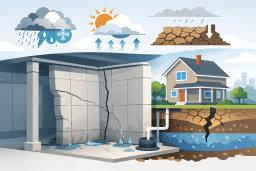
Bowed basement walls are most often caused by lateral soil pressure. Soil around a foundation is not static. It expands, shifts, becomes saturated, freezes, and presses against basement walls from the outside. Concrete block and poured concrete walls are built to carry the home above them, but they are not designed to withstand unlimited sideways force.
In Central Ohio, changing weather and clay-heavy soils can make this pressure especially persistent. A wet season followed by freezing temperatures can create a difficult combination for an already stressed foundation. The wall may first crack, then lean or bow inward as the outside pressure continues.
Water-Saturated Soil
Water is one of the biggest contributors to bowing walls. After heavy rain, snowmelt, or poor drainage, soil absorbs water and becomes much heavier. This is called hydrostatic pressure. The saturated soil pushes against the foundation with far more force than dry soil.
Poor grading, clogged gutters, short downspouts, and landscaping that directs water toward the home can all make the problem worse. Even a well-built foundation can become vulnerable when water repeatedly collects beside it. If the wall is already cracked, water can enter the crack and contribute to further deterioration.
Expansive Clay Soil
Many homes in the Columbus area sit near soils that contain clay. Clay expands as it absorbs water and shrinks as it dries. That repeated cycle creates movement around the foundation and adds uneven pressure to basement walls.
This does not mean every home with clay soil will develop a bowing wall. Drainage, foundation depth, construction quality, and the age of the home all matter. But expansive soil is a common reason a small foundation crack gradually turns into a larger structural concern.
Freeze-Thaw Cycles and Frost Pressure
Ohio winters can put additional stress on a foundation. Water in the soil freezes and expands. When the ground freezes near a basement wall, it can push inward with significant force. As temperatures rise, the soil thaws, shifts, and may allow more water to settle along the foundation.
Over many seasons, this freeze-thaw pattern can worsen existing wall movement. A wall that has been stable for years may begin showing cracks after a particularly wet fall or hard winter because the underlying pressure has finally exceeded what the wall can resist.
Poor Drainage Around the Foundation
Drainage problems do not always look dramatic. Sometimes the evidence is subtle: a downspout that empties next to the house, soil that slopes toward the foundation, or standing water after a storm. These conditions keep moisture where it does the most damage.
Correcting drainage is an essential part of protecting a foundation, but it may not reverse wall movement that has already occurred. If a basement wall is cracked or bowing, drainage improvements should be paired with a professional evaluation of the wall itself.
Construction and Backfill Issues
The soil placed around a new foundation after construction is called backfill. If backfill was poorly compacted, contains heavy clay, or does not drain well, it can settle and hold water against the home. Over time, that creates recurring lateral pressure.
Some older foundations may also have weaker materials, aging mortar joints, or walls that were never adequately protected from water intrusion. These factors do not always cause bowing by themselves, but they can reduce the wall's ability to withstand outside forces.
Warning Signs of a Bowing Basement Wall
The earlier a homeowner recognizes foundation movement, the more repair options may be available. A wall does not need to look dramatically curved to deserve attention. In fact, early intervention is often the most affordable path to long-term stability.
Watch for horizontal cracks across concrete block walls, especially cracks that follow a mortar joint. On poured concrete walls, horizontal cracking or a long crack near the middle of the wall can indicate inward pressure. Stair-step cracks in block walls, walls that lean inward at the top, and sections that bulge toward the basement are also serious warning signs.
Other clues include water entering through cracks, doors or windows above the basement that begin sticking, separated trim, or a gap where a basement wall meets the floor or ceiling framing. These signs do not automatically mean the home is in immediate danger, but they do mean the structure should be assessed before movement progresses.
Why Waiting Usually Makes the Repair Harder
Foundation movement tends to be progressive. The soil pressure remains outside the wall, and seasonal moisture changes continue year after year. A hairline crack may develop into a visible horizontal split. A slight inward deflection can eventually become a wall that requires more extensive correction.
Waiting can also limit repair choices. Early to moderate bowing may be a strong candidate for carbon fiber wall reinforcement. More severe movement, active collapse risk, or a wall that needs to be pushed back into position may require a different structural solution. The goal is not to sell a one-size-fits-all repair. It is to stabilize the wall with the right method while the problem is still manageable.
When Carbon Fiber Reinforcement Makes Sense
Carbon fiber reinforcement is designed to stop further inward movement in qualifying basement walls. Strong carbon fiber straps are bonded vertically to the interior wall using an engineered epoxy system. Once installed, the reinforcement helps the wall resist ongoing lateral pressure without exterior excavation, large steel beams, or wall anchors extending into the yard.
For homeowners, the advantage is clear: the repair is completed from inside the basement with minimal disruption to landscaping, driveways, patios, and daily life. Carbon fiber also has a low profile, so it can work well in finished or partially finished basements where preserving usable space matters.
There are trade-offs. Carbon fiber is intended to stabilize a wall, not magically straighten a severely displaced foundation. It is most effective when the wall is still structurally suitable for reinforcement and the cause of the pressure, particularly drainage, is being addressed. A qualified inspection determines whether carbon fiber is the right solution or whether the damage calls for another repair approach.
What to Do If You See a Horizontal Basement Crack
Start by taking clear photos and noting where the crack is located. Check whether it appears wider than before, whether water is entering, and whether the wall looks curved or pushed inward. Avoid trying to hide the crack with paint, patching compound, or shelving. Those steps can conceal the evidence without stopping the pressure behind it.
Next, make sure roof runoff is directed away from the foundation and remove any obvious sources of standing water near the home. Then schedule a professional foundation inspection. An experienced specialist can measure wall movement, identify whether the crack pattern is structural, and explain the repair options in plain language.
For homeowners in Union County, Delaware County, and the Columbus area, Carbon Fiber Installation LLC provides focused evaluations and non-invasive carbon fiber stabilization for qualifying walls. The company backs its work with a lifetime transferable warranty, helping protect both your home and its future marketability.
A bowing wall is a signal to act, not a reason to panic. Get the movement evaluated while repair options are still straightforward, protect the wall from further pressure, and give your basement the stability it was built to provide.
When to Call the Experts at Carbon Fiber Installation, LLC
Don’t wait for problems to worsen. Schedule a free basement wall inspection if you notice:
- New or widening cracks
- Bowing or leaning walls
- Water stains, efflorescence, or musty odors
- Sticking doors/windows or upper-level cracks
We serve the greater Columbus, Ohio area with 24/7 emergency service and a 100% satisfaction guarantee.
Protect Your Home Today
Your foundation supports everything you’ve built. Investing in professional carbon fiber reinforcement from Carbon Fiber Install, LLC is one of the smartest decisions you can make for long-term structural integrity, safety, and peace of mind. It’s a modern, proven solution that stops damage in its tracks while preserving your home’s usability and resale value.
Ready to take action? Contact us today for a free quote or inspection.
- Phone: (740) 436-9316
- Email: info@carbonfiberinstall.com
- Mailing Address: 322 W. 5th Street PMB 110, Marysville, Ohio 43040
Visit www.carbonfiberinstall.com to learn more about our services, view project inspiration, or request service. Don’t let small cracks become big headaches—secure your home’s future with Carbon Fiber Installation, LLC.