

Epoxy Injection Versus Carbon Fiber: Which Fits?
A basement wall crack can look small while pointing to a much bigger question: Is the wall simply cracked, or is it beginning to move? That distinction drives the decision between epoxy injection versus carbon fiber. Both methods can be valuable, but they solve different structural problems. Choosing the wrong one may leave a homeowner with a repaired-looking crack and an unresolved wall movement issue.
For homeowners in the Columbus area, where wet soil, hydrostatic pressure, and freeze-thaw cycles can put repeated stress on foundation walls, a clear diagnosis comes before any repair recommendation. The right solution should address the condition of the wall, protect the home’s value, and avoid unnecessary disruption.
Epoxy Injection Versus Carbon Fiber for Basement Walls
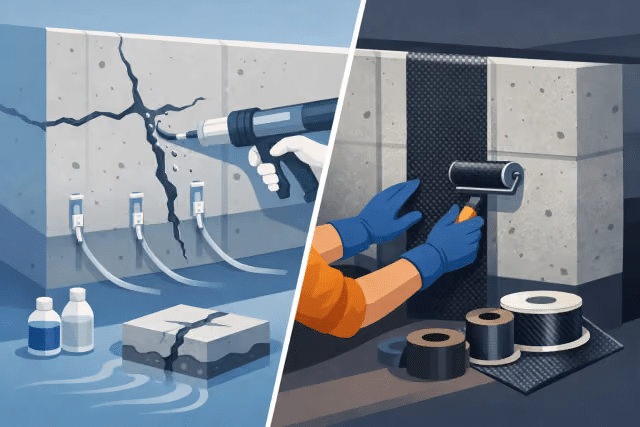
Epoxy injection is primarily a crack repair method. A technician injects a structural epoxy into a crack to bond the separated concrete back together. When the crack is dry, stable, and not caused by ongoing lateral pressure, epoxy can restore continuity across the crack and help prevent it from opening further.
Carbon fiber reinforcement is a wall stabilization method. High-strength carbon fiber straps or fabric are bonded to the interior face of a basement wall using an engineered epoxy system. The reinforcement is designed to resist further inward movement from outside soil pressure. It does not rely on digging around the foundation, installing bulky steel beams, or sacrificing usable basement space.
The difference is straightforward: epoxy injection repairs the crack itself, while carbon fiber is used to stabilize a wall that is showing signs of movement. In some qualifying cases, the strongest approach includes both - repair the crack where appropriate, then reinforce the wall to help stop additional bowing or inward deflection.
When Epoxy Injection May Be the Right Repair
Epoxy injection is often a practical choice when a poured concrete foundation has a narrow vertical, diagonal, or horizontal crack but the wall remains flat and structurally stable. The crack should be evaluated for moisture, width, location, and evidence of change over time.
For example, a vertical crack that formed from normal concrete shrinkage or minor settling may be a good candidate for injection if there is no bowing, shearing, or displacement. Once properly injected, epoxy can create a strong bond within the concrete rather than simply covering the surface with a patch.
However, epoxy is not a cure for active foundation pressure. If the wall is bowing inward, pushing at the bottom, leaning at the top, or developing a long horizontal crack near the middle, filling that crack alone does not counteract the force still acting on the wall. The crack may be sealed, but the pressure has not gone away.
Epoxy injection may also be unsuitable when a crack is actively leaking or contaminated with water. A waterproofing repair, drainage correction, or another crack treatment may be necessary before or alongside structural work. Water management and structural stabilization are connected, but they are not the same repair.
When Carbon Fiber Is the Better Choice
Carbon fiber is often the smarter solution for early to moderate basement wall movement. It is especially well suited to poured concrete or block walls that show horizontal cracking, mild inward bowing, or evidence that exterior soil pressure is beginning to overcome the wall’s original resistance.
A carbon fiber system works by tying the affected wall area into the framing structure above and the foundation below. Once installed over properly prepared concrete, the straps provide exceptional tensile strength with a low-profile finish. Homeowners can often finish the basement wall afterward without building a framed wall around large steel supports.
This approach has several advantages for a qualifying home. Installation is completed from inside the basement, so there is typically no excavation tearing up landscaping, driveways, patios, or outdoor living areas. The system is clean, discreet, and designed for long-term wall reinforcement.
Carbon fiber also makes sense for homeowners who want to act before the damage becomes severe. A wall that has moved slightly may still be a strong candidate for interior reinforcement. Waiting until movement is advanced can narrow the available repair options and may lead to more invasive work.
That said, carbon fiber is not the answer for every foundation. A severely displaced wall, a wall with major deterioration, or a foundation that is actively failing may require a different engineered solution. Honest repair guidance means recommending carbon fiber only when the wall condition falls within the system’s intended limits.
What Homeowners Should Look for Before Choosing
The condition of the crack matters, but the pattern around it matters even more. A single hairline vertical crack tells a different story than a horizontal crack running across the basement wall. Likewise, a wall that appears flat today may need a closer look if doors stick, floors slope, or the crack has visibly widened since last season.
Watch for these signs of lateral pressure and potential wall movement:
- Horizontal cracks in poured concrete or block walls
- Inward bowing, leaning, or a wall that feels out of plumb
- Stair-step cracks along block or brick foundation joints
- Crumbling mortar, shifted blocks, or gaps near the top of the wall
- Repeated water entry through the same crack or wall seam
These warning signs do not automatically mean a home needs the most expensive repair. They do mean the wall deserves a professional inspection before a cosmetic patch, paint, or simple crack filler is applied.
Cost, Disruption, and Long-Term Protection
Homeowners often compare epoxy injection versus carbon fiber because they are weighing cost against peace of mind. Epoxy injection generally costs less when the issue is truly limited to a stable crack. It is a focused repair, and it can be effective in the right circumstances.
Carbon fiber costs more than filling one crack because it is designed to reinforce the wall against continued pressure. Yet it can be significantly less disruptive and more financially sensible than exterior excavation, steel beam installation, or wall anchor systems when the foundation qualifies. The value is not just in the material. It is in preventing a manageable movement issue from becoming a much larger structural repair.
The installation process also matters. Exterior excavation can involve landscaping damage, heavy equipment, and extended work around the home. Carbon fiber reinforcement is installed from the basement interior, usually with far less disruption to the property and daily routine. For homeowners planning to sell, a documented structural repair with transferable warranty coverage can also provide added confidence during inspection negotiations.
Do Not Treat a Moving Wall Like a Simple Crack
A common mistake is assuming that every basement crack needs the same fix. Surface sealants and do-it-yourself products may hide the visible line, but they cannot determine why the crack formed. If exterior soil is pressing against the wall, the foundation needs more than a cosmetic improvement.
The same caution applies to treating every crack as a major emergency. Some cracks are stable and can be repaired without wall reinforcement. The goal is not to sell a larger repair than necessary. The goal is to identify the source of the damage and install a solution that matches the actual structural need.
A qualified inspection should include a close look at crack direction, wall deflection, moisture conditions, exterior grading, soil pressure indicators, and the age and construction of the foundation. Measurements can help establish whether movement is active and whether carbon fiber reinforcement is appropriate.
Get a Clear Repair Plan Before Damage Grows
If you have a horizontal basement crack, a wall that is starting to bow, or recurring concern about foundation movement, do not wait for the next heavy rain or freeze-thaw season to make the decision for you. Early action can preserve more repair options and help protect the home you have worked hard to build.
Carbon Fiber Installation LLC helps homeowners understand what their walls are telling them and recommends carbon fiber reinforcement only when it is the right fit. Ask for a clear inspection, a straightforward explanation of your options, and details on available lifetime transferable warranty protection. A stable basement wall starts with a repair plan built for the problem you actually have.
When to Call the Experts at Carbon Fiber Installation, LLC
Don’t wait for problems to worsen. Schedule a free basement wall inspection if you notice:
- New or widening cracks
- Bowing or leaning walls
- Water stains, efflorescence, or musty odors
- Sticking doors/windows or upper-level cracks
We serve the greater Columbus, Ohio area with 24/7 emergency service and a 100% satisfaction guarantee.
Protect Your Home Today
Your foundation supports everything you’ve built. Investing in professional carbon fiber reinforcement from Carbon Fiber Install, LLC is one of the smartest decisions you can make for long-term structural integrity, safety, and peace of mind. It’s a modern, proven solution that stops damage in its tracks while preserving your home’s usability and resale value.
Ready to take action? Contact us today for a free quote or inspection.
- Phone: (740) 436-9316
- Email: info@carbonfiberinstall.com
- Mailing Address: 322 W. 5th Street PMB 110, Marysville, Ohio 43040
Visit www.carbonfiberinstall.com to learn more about our services, view project inspiration, or request service. Don’t let small cracks become big headaches—secure your home’s future with Carbon Fiber Installation, LLC.