

What Causes Basement Wall Bulging? 7 Key Forces
A basement wall rarely bulges without warning. You may first notice a horizontal crack, a section of block that no longer looks straight, or a wall that seems to lean farther inward after a heavy rain. If you are asking what causes basement wall bulging, the short answer is outside pressure pushing against a wall that was never designed to flex very much. The longer answer matters because the right repair depends on what is creating that pressure and how far the movement has progressed.
Bulging walls are a structural concern, not a cosmetic one. Paint, patching compound, or a waterproofing coating may hide the visible symptom, but none of them stops a moving wall. A qualified inspection can identify whether the wall is a good candidate for non-invasive carbon fiber reinforcement or whether it needs another form of structural repair.
What Causes Basement Wall Bulging?
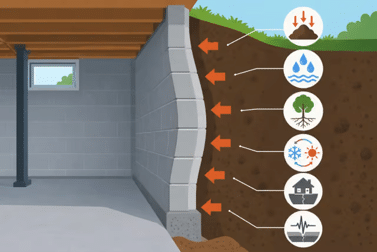
Most basement walls bulge because the soil outside the foundation is exerting more lateral force than the wall can resist. Concrete block and poured concrete are strong under vertical weight, but they are more vulnerable when pressure pushes horizontally from the outside.
That pressure often builds gradually over seasons. Ohio's wet springs, heavy storms, clay-rich soils, and freeze-thaw cycles can all contribute. The wall may move only slightly at first, but small movement can become more noticeable as the forces continue year after year.
- Saturated soil creates hydrostatic pressure
Water is one of the most common reasons basement walls begin to bow inward. When rainwater or melting snow soaks into the soil around your home, the ground becomes heavier and water pressure builds against the foundation. This is called hydrostatic pressure.
A properly drained foundation has less water collecting beside it. But when the soil remains saturated, that pressure can become substantial. The wall may crack horizontally near the middle, where the inward force is often greatest. In block walls, you may see stair-step cracks or individual blocks beginning to shift.
Waterproofing can help manage moisture, but it does not automatically restore a wall that has already moved. Drainage and structural stabilization often need to work together.
- Poor grading sends roof runoff toward the foundation
The ground around your home should slope away from the foundation so surface water drains outward. When landscaping settles, a patio is installed at the wrong pitch, or mulch and soil build up against the siding, water can be directed toward the basement instead.
Short downspouts and disconnected extensions create the same problem. Each storm deposits a concentrated amount of water near the wall, saturating the backfill soil and increasing pressure where you least want it. A simple grading or gutter correction can reduce future moisture loading, but it will not straighten or reinforce a wall that is already bulging.
- Expansive clay soil swells when wet
Many homes around Columbus, Marysville, and the surrounding counties sit in areas with clay-heavy soil. Clay is especially troublesome because it changes volume. It absorbs water and expands, then shrinks as it dries.
That repeated expansion and contraction places changing pressure on basement walls. During wet periods, expansive soil can press aggressively against the foundation. During dry periods, it can pull away and leave gaps that later fill quickly with water. This cycle can contribute to cracks, bowing, and long-term wall fatigue.
The soil itself cannot be changed easily, which is why a lasting repair focuses on giving the wall the strength to resist future inward movement while also improving water management around the home.
- Freeze-thaw cycles push soil against the wall
Cold weather adds another force. When moisture in the soil freezes, it expands. This frost action can shift soil and create added pressure along the exterior side of a basement wall. As temperatures rise, the soil thaws, becomes saturated, and may exert water pressure as well.
One winter will not usually cause a sound foundation wall to bulge. The concern is repeated seasonal stress, especially when drainage is poor or the wall has existing cracks. Homeowners sometimes assume a crack is old and harmless because it has been there for years. If the crack is widening, allowing water through, or accompanied by inward movement, it deserves a professional evaluation.
- Weak backfill or improper exterior drainage
After a foundation is built, the excavated area around it is filled back in. That backfill may be looser and more water-absorbent than undisturbed soil farther from the home. Over time, it can hold water against the foundation or settle unevenly.
Clogged footing drains, damaged drain tile, or no exterior drainage system can make the situation worse. Water has nowhere to go, so it remains against the wall. The result is a persistent combination of heavy, wet soil and hydrostatic pressure.
This is one reason the visible location of a bulge does not always reveal the whole problem. The wall may be moving at its midpoint, while the drainage failure begins near a corner, under a deck, or at a poorly managed downspout.
- Foundation walls were not built to handle the load
Some basement walls have less resistance to lateral pressure because of their original design or construction. Older block walls, walls with inadequate reinforcement, or walls affected by poor mortar joints may be more likely to bow. A thin poured concrete wall can also develop trouble when exterior pressure becomes excessive.
Construction limitations do not necessarily mean the home is unsafe or that excavation is the only answer. It does mean the repair should be chosen based on the wall material, crack pattern, amount of movement, and whether movement is ongoing. Strong repairs begin with an accurate diagnosis, not a one-size-fits-all recommendation.
- Tree roots and nearby loads can add localized stress
Large mature trees close to a foundation can affect soil moisture and, in some cases, create localized pressure as roots grow. Driveways, retaining walls, heavy equipment, or new construction near the home can also change how loads are distributed in the soil.
These factors are less common than poor drainage and saturated soil, but they can be part of the picture. A wall that bulges in one specific area rather than across its full length may point to a localized exterior condition worth investigating.
Signs a Bulging Basement Wall Needs Attention Now
Not every foundation crack signals an emergency, but a wall that is visibly bowing should not be put off until a future remodel or home sale. Movement tends to worsen as seasonal pressure returns. Early repairs are often less invasive and more affordable than waiting until the wall requires major reconstruction.
Watch for horizontal cracks, stair-step cracks in block walls, inward bowing, sections that appear pushed out of alignment, white mineral deposits, persistent water intrusion, or doors and windows above the basement that begin sticking. A basement wall that has moved more than a slight amount needs a structural assessment, especially if the change is recent or progressing.
If you see sudden movement, a large crack, collapsing block, or a wall separating from adjoining walls, treat it as urgent. Keep people away from the affected area and arrange an immediate professional inspection.
How Carbon Fiber Reinforcement Stops Further Movement
For many early to moderate cases of bowing, carbon fiber wall reinforcement offers a clean, powerful alternative to steel beams, wall anchors, and exterior excavation. High-strength carbon fiber straps are bonded vertically to the prepared foundation wall and anchored at the top structure. Once installed correctly, they help resist additional inward movement without taking up valuable basement space.
Carbon fiber is not a repair for every wall. A severely displaced wall, a wall with failed sections, or a foundation facing active major settlement may need a different solution. But for qualifying walls, it provides permanent-strength reinforcement with minimal disruption to the home. The straps can be painted after installation, making them a practical option for finished or soon-to-be-finished basements.
Carbon Fiber Installation LLC evaluates the wall condition, identifies the pressure sources, and recommends a repair based on the actual structure, not fear-driven sales pressure. A warranty-backed stabilization plan can also provide valuable reassurance when protecting your home or preparing it for resale.
Do Not Repair the Symptom and Ignore the Cause
A bulging wall needs structural support, but the outside conditions that caused the pressure should be addressed too. Keep gutters clear, extend downspouts away from the foundation, maintain positive grading, and correct drainage problems that allow water to collect near the home. These measures reduce the forces working against your foundation after repair.
The most helpful next step is simple: document what you see, note whether cracks change after rain or seasonal weather, and schedule an inspection before the next round of pressure has a chance to move the wall farther. Acting early protects more than a basement wall - it protects the strength, safety, and long-term value of your home.
When to Call the Experts at Carbon Fiber Installation, LLC
Don’t wait for problems to worsen. Schedule a free basement wall inspection if you notice:
- New or widening cracks
- Bowing or leaning walls
- Water stains, efflorescence, or musty odors
- Sticking doors/windows or upper-level cracks
We serve the greater Columbus, Ohio area with 24/7 emergency service and a 100% satisfaction guarantee.
Protect Your Home Today
Your foundation supports everything you’ve built. Investing in professional carbon fiber reinforcement from Carbon Fiber Install, LLC is one of the smartest decisions you can make for long-term structural integrity, safety, and peace of mind. It’s a modern, proven solution that stops damage in its tracks while preserving your home’s usability and resale value.
Ready to take action? Contact us today for a free quote or inspection.
- Phone: (740) 436-9316
- Email: info@carbonfiberinstall.com
- Mailing Address: 322 W. 5th Street PMB 110, Marysville, Ohio 43040
Visit www.carbonfiberinstall.com to learn more about our services, view project inspiration, or request service. Don’t let small cracks become big headaches—secure your home’s future with Carbon Fiber Installation, LLC.