

Best Solutions for Cracked Foundation Walls
A crack in a basement wall can be a simple water-entry point, or it can be the first visible sign that outside soil pressure is pushing your foundation inward. The best solutions for cracked foundation walls depend on that difference. Treating a moving wall like a minor leak can waste money and allow the structural problem to get worse.
Homeowners across the Columbus area often notice the same early warning signs: a vertical crack near a corner, a horizontal crack running across concrete block, water after heavy rain, or a wall that no longer looks straight. The right repair starts with an honest evaluation of what caused the crack, whether the wall is still moving, and what it will take to stabilize it for the long term.
First, Know What the Crack Is Telling You
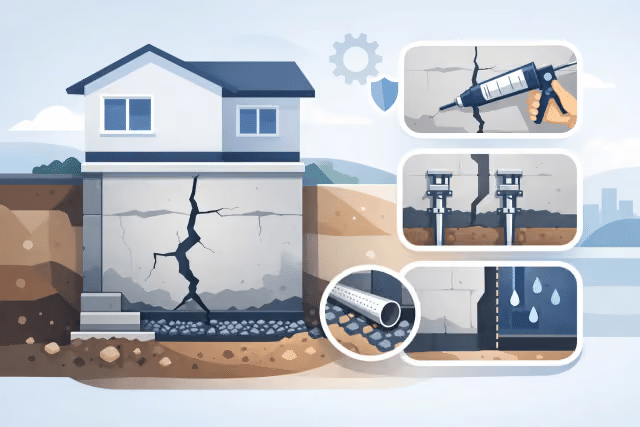
Foundation walls crack for different reasons. Concrete shrinks slightly as it cures. Seasonal moisture changes can create minor movement. Hydrostatic pressure builds when wet soil outside the foundation presses against the wall. Freeze-thaw cycles, poor drainage, clogged gutters, and expansive soil can make that pressure worse.
A narrow vertical crack is often less serious than a horizontal crack, but it should not be ignored. Vertical cracks can allow water into the basement and may widen over time. A horizontal crack, stair-step cracking in block walls, or cracks paired with bowing are more concerning because they often point to lateral pressure and structural movement.
Look beyond the crack itself. If you see walls leaning inward, a gap where the wall meets the floor joists, crumbling block, doors above the basement that stick, or repeated water intrusion, the repair should address stability as well as sealing. A wall that is actively moving needs reinforcement, not just cosmetic patching.
Best Solutions for Cracked Foundation Walls
There is no one repair that fits every foundation. The best choice depends on crack location, wall material, the amount of movement, drainage conditions, and whether the wall can be accessed from inside or outside. A qualified foundation specialist should explain why a recommended system fits your specific condition.
Epoxy or polyurethane crack injection
For a stable, nonstructural vertical crack in poured concrete, injection can be a practical repair. Epoxy injection bonds the crack and can restore continuity in the concrete. Polyurethane injection is more flexible and is commonly used to stop water from entering through a crack.
This approach is effective when the wall is sound and the crack is not widening, bowing, or caused by continuing soil pressure. It is not a substitute for structural reinforcement. If the underlying wall is moving, an injected crack may reopen because the force causing the damage was never addressed.
Carbon fiber wall reinforcement
Carbon fiber reinforcement is often the strongest fit for early to moderate bowing, horizontal cracking, and inward basement wall movement. High-strength carbon fiber straps are bonded vertically to the interior face of the wall using an engineered adhesive system. Once installed, the system helps hold the wall in place and resist further inward movement.
For qualifying walls, carbon fiber offers major advantages over more disruptive repair methods. Installation is completed from inside the basement, so there is usually no excavation, no heavy equipment tearing up landscaping, and no bulky steel beams taking up valuable basement space. The straps have a low profile and can often be painted or finished over after installation.
Carbon fiber is not designed to pull a severely displaced wall back into position. It is designed to stabilize the wall and prevent additional movement. That distinction matters. If a wall has significant inward displacement, broken block, or advanced structural damage, a different solution may be required before reinforcement can be considered.
Steel beams and wall anchors
Steel beams and wall anchors remain viable repairs for certain foundation conditions. Steel posts can provide interior support where a wall needs additional bracing. Wall anchors can be used to resist outside soil pressure by connecting the foundation wall to an anchor point in stable soil away from the house.
The trade-off is disruption. Anchors require exterior access and excavation, while steel systems occupy space inside the basement. These solutions can be appropriate for more advanced movement or wall conditions that do not qualify for carbon fiber. The goal is not to force every problem into one method. The goal is to choose the system that can reliably protect the home.
Exterior excavation and waterproofing
When water management outside the home is the primary issue, exterior waterproofing and drainage improvements may be necessary. This can involve excavating around the foundation, repairing exterior cracks, applying waterproof coatings, and improving footing drainage.
Exterior work can solve moisture problems, but it is often more labor-intensive and disruptive than an interior structural repair. It also does not automatically stabilize a wall that has already bowed. If lateral pressure has caused movement, the wall may need reinforcement in addition to drainage improvements.
When Carbon Fiber Is the Smarter Option
Carbon fiber is especially effective when the basement wall shows early warning signs but has not suffered major displacement. Horizontal cracks in poured concrete or block walls, inward bowing, and persistent pressure-related cracking are common examples. A professional inspection can confirm whether the wall falls within the range that carbon fiber systems are engineered to stabilize.
For homeowners, the appeal is straightforward: strong repairs with minimal disruption. There is no need to sacrifice a yard, remove a deck, or live with large steel supports across the basement. A properly installed carbon fiber system targets the structural problem from inside the home and leaves a clean finish behind.
The quality of the installation matters as much as the material. The wall must be properly prepared, the reinforcement must be positioned according to the system design, and the adhesive must be installed under the right conditions. This is not a repair to trust to a quick patch or an unqualified contractor.
Carbon Fiber Installation LLC specializes in residential basement wall stabilization using carbon fiber systems. For homeowners with qualifying cracks and early to moderate movement, the company provides a non-invasive repair backed by a lifetime transferable warranty and a 100% satisfaction guarantee. That warranty protection can also support confidence when it is time to sell the home.
Do Not Let Water and Soil Pressure Keep Building
A foundation repair is strongest when the causes of pressure are also managed. Check that gutters are clean, downspouts discharge well away from the house, and the soil slopes away from the foundation. Avoid allowing mulch, landscaping, or settled soil to create a channel that directs water against the basement wall.
These improvements do not replace structural repair, but they can reduce the moisture conditions that contribute to pressure. Think of drainage and wall reinforcement as two parts of protecting the same system. One manages the source of stress. The other strengthens the wall against the stress it has already faced.
Be cautious about simply covering cracks with hydraulic cement, caulk, or paint. Those materials may improve appearance temporarily, but they cannot stop a wall from bowing or prevent a structural crack from progressing. A fresh coat of paint can hide evidence that a future buyer, home inspector, or contractor needs to see.
What to Expect From a Professional Evaluation
A useful inspection should leave you with clarity, not more confusion. The specialist should identify the crack pattern, measure any bowing or displacement, assess the condition of the wall material, and look for signs that water or soil pressure is contributing to the problem.
You should also receive a clear explanation of whether the crack is primarily a waterproofing concern, a structural concern, or both. Ask what the proposed repair is intended to do, what it will not do, and whether drainage corrections are recommended. A dependable contractor will not sell an invasive repair when a lower-disruption solution is appropriate, and will not recommend a simple crack fill when the wall needs stabilization.
Foundation cracks rarely improve by waiting. If you have noticed horizontal cracking, bowing, or water entering through a basement wall, schedule a professional evaluation while the issue is still manageable. A timely repair can protect your basement, your home's value, and the peace of mind that comes from knowing the wall is built to stay stable.
When to Call the Experts at Carbon Fiber Installation, LLC
Don’t wait for problems to worsen. Schedule a free basement wall inspection if you notice:
- New or widening cracks
- Bowing or leaning walls
- Water stains, efflorescence, or musty odors
- Sticking doors/windows or upper-level cracks
We serve the greater Columbus, Ohio area with 24/7 emergency service and a 100% satisfaction guarantee.
Protect Your Home Today
Your foundation supports everything you’ve built. Investing in professional carbon fiber reinforcement from Carbon Fiber Install, LLC is one of the smartest decisions you can make for long-term structural integrity, safety, and peace of mind. It’s a modern, proven solution that stops damage in its tracks while preserving your home’s usability and resale value.
Ready to take action? Contact us today for a free quote or inspection.
- Phone: (740) 436-9316
- Email: info@carbonfiberinstall.com
- Mailing Address: 322 W. 5th Street PMB 110, Marysville, Ohio 43040
Visit www.carbonfiberinstall.com to learn more about our services, view project inspiration, or request service. Don’t let small cracks become big headaches—secure your home’s future with Carbon Fiber Installation, LLC.