

How to Reinforce Block Foundation Walls Safely
A block foundation wall rarely fails without giving you warning. Horizontal cracks, stair-step cracking along mortar joints, inward bowing, or a wall that looks slightly pushed out of line can all signal pressure building behind the foundation. Knowing how to reinforce block foundation walls starts with recognizing that the visible crack is often not the whole problem. The goal is not to make the wall look better. It is to stop further movement and protect the structure above it.
For homeowners in the Columbus area, wet soils, poor drainage, and seasonal freeze-thaw cycles can all add stress to basement walls. The right repair depends on how far the wall has moved, what is causing the movement, and whether the wall is still a good candidate for interior reinforcement.
Start by Identifying the Type of Wall Movement
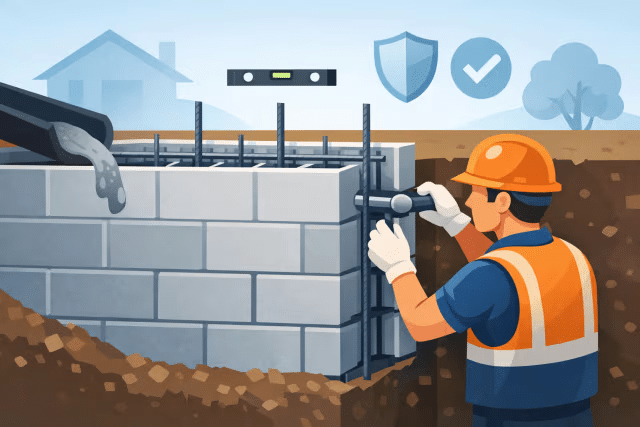
Concrete block walls are made from individual masonry units and mortar joints. That construction makes them particularly vulnerable to lateral soil pressure. When saturated soil presses against the exterior side of the wall, the wall can crack at a mortar joint or begin to bow inward near the middle.
A horizontal crack is one of the most urgent signs. It commonly appears at the point where outside soil pressure is greatest and may run across much of the basement wall. Stair-step cracks can also indicate movement, especially when they widen over time or appear alongside a bowed section. Vertical cracks are not always structural, but they still deserve a close inspection if they leak, widen, or occur with other signs of movement.
Look beyond the crack itself. A sticking basement door, gaps where the wall meets the floor joists, damp spots, efflorescence, or loose block faces can help reveal whether the issue is active. Take dated photos and measure any visible bowing. This documentation is useful because a wall that is stable may need a different solution than a wall that is continuing to move.
How to Reinforce Block Foundation Walls With Carbon Fiber
For early to moderate inward movement, carbon fiber wall reinforcement can be one of the most effective ways to stabilize a block foundation from the inside. Carbon fiber straps are bonded vertically to the wall using a high-strength structural epoxy. Once installed correctly, the system helps resist continued inward movement without taking up valuable basement space.
The installation begins with preparation. The wall surface must be clean, dry, and structurally sound enough for the epoxy bond. Paint, loose mortar, dirt, and deteriorated material are removed from the strap locations. A qualified installer then evaluates the wall layout, crack pattern, rim joist condition, and the extent of the bowing to determine strap placement and spacing.
The carbon fiber is applied from the foundation footing area to the framing at the top of the wall. This top connection matters. A reinforcement system is only as dependable as the structural surfaces it ties into. The result is a low-profile repair that can be finished over in many basements, unlike large steel beams that remain visible and occupy floor space.
Carbon fiber does not pull a severely bowed wall back into place. Its primary job is stabilization: stopping the movement from getting worse. That is a major benefit when the wall is still within acceptable repair limits. It provides strength where it is needed while avoiding the disruption and expense that often come with exterior excavation.
Fix Water and Soil Pressure at the Same Time
Reinforcing the wall addresses the structural symptom, but reducing outside pressure helps protect the repair for the long term. Water is heavy, and wet soil creates more lateral force against a basement wall than well-drained soil. If gutters overflow beside the foundation or the ground slopes toward the house, reinforcement alone is not the complete answer.
Start with practical drainage corrections. Gutters should be clean, downspouts should discharge well away from the foundation, and the grade should direct surface water away from the home. Avoid piling mulch, soil, firewood, or landscaping materials against the block wall. These steps are relatively simple, but they reduce the conditions that often cause wall movement to accelerate.
If there is persistent water intrusion, a drainage or waterproofing evaluation may also be necessary. The best approach depends on the source of the moisture. Surface runoff, a failed downspout connection, high groundwater, and plumbing leaks are different problems with different solutions. A trustworthy foundation specialist should explain what is causing the pressure instead of recommending the same repair for every basement.
When Carbon Fiber Is the Right Repair
Carbon fiber reinforcement is a strong option when a wall has cracks or modest bowing but has not deteriorated beyond repair. It is especially useful for homeowners who want a clean, non-invasive solution that preserves usable basement space. The installation is typically faster and less disruptive than excavation, wall anchors, or extensive steel reinforcement.
It is not the answer for every foundation problem. If blocks are badly displaced, crumbling, or moving several inches inward, the wall may require a more extensive structural repair. In some cases, the damaged section may need reconstruction. Severe movement, ongoing settlement, or a compromised footing can also require engineering evaluation before any reinforcement system is selected.
This is why a visual inspection from a qualified professional matters. The repair must match the condition of the wall, not just the homeowner's preferred price point or the contractor's preferred method. An honest recommendation should tell you whether carbon fiber is appropriate, what it can realistically accomplish, and what conditions must be corrected to support a lasting result.
Why DIY Foundation Reinforcement Can Go Wrong
It is tempting to treat a basement crack like a standard home repair. Hardware-store crack fillers and masonry patch products can improve appearance and reduce minor water seepage, but they do not stop an actively bowing wall. Covering the crack without addressing the force behind it can delay the repair while the structural problem continues.
Even carbon fiber systems require more than simply applying material to the wall. Surface preparation, epoxy selection, strap layout, wall condition, and connection details all affect performance. An improperly bonded strap may not provide the intended reinforcement, even if it looks fine on the surface.
There is also a safety issue. A bowing block wall is carrying soil pressure from outside while supporting the home above. If the wall appears significantly displaced, blocks are separating, or you can see open gaps near the top of the wall, do not try to straighten it yourself. Limit activity near the affected area and schedule a professional assessment promptly.
What to Expect From a Professional Evaluation
A good foundation inspection should give you clarity, not pressure. The specialist should examine the crack pattern, measure any inward deflection, inspect for water-management issues, and look at the framing connection above the wall. They should also ask whether the cracks have changed, whether the basement has flooded, and whether you have noticed doors, floors, or walls shifting elsewhere in the house.
Ask direct questions before approving a repair. What is causing the movement? Is the wall still suitable for carbon fiber reinforcement? Will drainage corrections be needed? What warranty comes with the system, and is it transferable if you sell the home? Clear answers help you compare options based on long-term protection rather than the lowest initial number.
Carbon Fiber Installation LLC specializes in low-profile carbon fiber systems for qualifying residential foundation walls. For homeowners dealing with early to moderate wall movement, a properly installed system can provide dependable stabilization without turning the yard or basement into a construction zone. Lifetime transferable warranty coverage can also provide meaningful reassurance when protecting your home and its resale value.
Do Not Wait for a Small Bow to Become a Major Repair
Foundation movement does not always progress quickly, but it rarely improves on its own. The earlier a block wall is evaluated, the more repair options may be available. Waiting until the wall has moved dramatically can turn a straightforward interior reinforcement project into a larger, more invasive structural repair.
If you see a horizontal crack, a stair-step crack that is widening, or a basement wall pushing inward, treat it as a reason to get answers. A professional inspection can tell you whether carbon fiber reinforcement is the right next step and help you protect the home before small movement becomes a costly structural problem.
When to Call the Experts at Carbon Fiber Installation, LLC
Don’t wait for problems to worsen. Schedule a free basement wall inspection if you notice:
- New or widening cracks
- Bowing or leaning walls
- Water stains, efflorescence, or musty odors
- Sticking doors/windows or upper-level cracks
We serve the greater Columbus, Ohio area with 24/7 emergency service and a 100% satisfaction guarantee.
Protect Your Home Today
Your foundation supports everything you’ve built. Investing in professional carbon fiber reinforcement from Carbon Fiber Install, LLC is one of the smartest decisions you can make for long-term structural integrity, safety, and peace of mind. It’s a modern, proven solution that stops damage in its tracks while preserving your home’s usability and resale value.
Ready to take action? Contact us today for a free quote or inspection.
- Phone: (740) 436-9316
- Email: info@carbonfiberinstall.com
- Mailing Address: 322 W. 5th Street PMB 110, Marysville, Ohio 43040
Visit www.carbonfiberinstall.com to learn more about our services, view project inspiration, or request service. Don’t let small cracks become big headaches—secure your home’s future with Carbon Fiber Installation, LLC.