

How to Prevent Basement Wall Failure
A basement wall rarely fails all at once. It usually starts with a horizontal crack, a slight inward curve, or a spot where the wall no longer looks straight when you sight down it. Homeowners searching for how to prevent basement wall failure are usually dealing with that exact moment - the point where concern turns into urgency.
That urgency is justified. Basement walls are structural walls. When they begin to move, the problem is no longer cosmetic. It affects the stability of the home, the safety of the space, and often the long-term value of the property. The good news is that early action gives you far more control over cost, repair options, and disruption.
Why basement walls start to fail
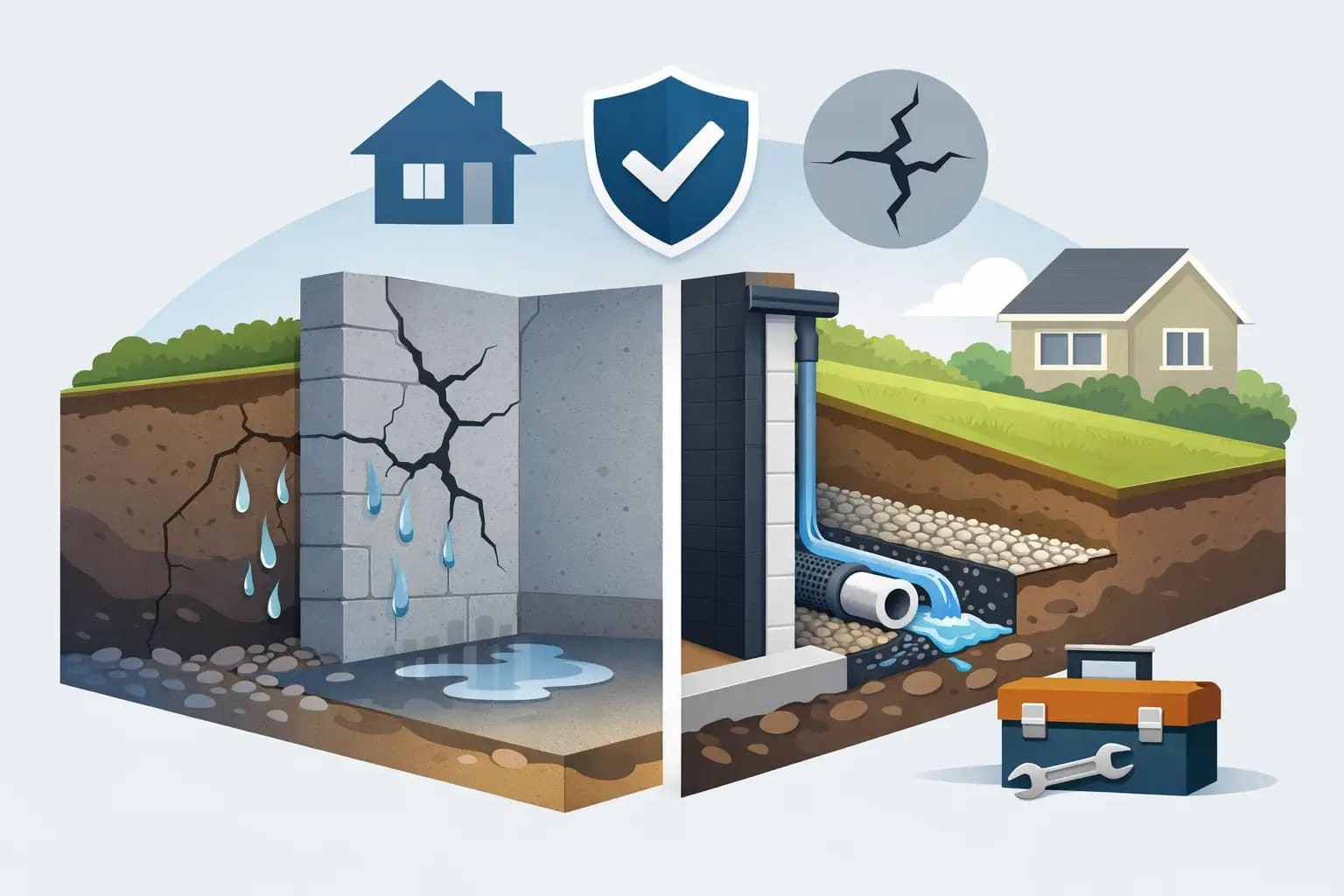
Most basement wall failure is pressure-related. Soil around the home expands when it gets saturated, contracts when it dries, and pushes harder during freeze-thaw cycles. Over time, that repeated lateral force presses against the wall until the wall starts to crack, bow, shear, or slide inward.
Poor drainage is one of the biggest contributors. When water is allowed to collect around the foundation, hydrostatic pressure rises. That pressure does not just cause leaks. It can physically force a wall to move.
The type of wall matters too. Block walls are especially vulnerable because they contain hollow cores and mortar joints that can weaken under pressure. Poured concrete walls are generally stronger, but they can still crack and shift if drainage problems, settlement, or excessive soil loads are left unaddressed.
In central Ohio, seasonal moisture swings and clay-heavy soils can make this worse. A wall that seems stable in one season may show movement after prolonged rain or winter freeze-thaw conditions. That is why waiting for a major structural event is the wrong strategy.
How to prevent basement wall failure before it gets worse
Prevention starts with understanding a simple truth: once a wall begins moving, it usually does not correct itself. The goal is to reduce outside pressure, control water, and reinforce the wall before moderate movement becomes major structural damage.
The first step is water management. If downspouts dump water too close to the home, if grading slopes toward the foundation, or if gutters overflow near the basement wall, you are feeding the problem. Water-saturated soil becomes heavier and more aggressive. Correcting drainage can reduce the force acting against the wall and slow further movement.
That said, drainage improvements alone are not always enough. If the wall has already bowed, cracked horizontally, or shifted inward, structural reinforcement is often the real line between stabilization and continued failure. Homeowners sometimes hope that fixing the outside water issue will reverse the wall movement. It usually will not. Water control helps prevent worsening pressure, but a compromised wall often still needs repair.
Warning signs you should never ignore
Some signs are obvious. Others are subtle enough that homeowners dismiss them for months or even years. If you want to prevent full basement wall failure, these are the changes that deserve immediate attention.
A horizontal crack in a block wall is one of the most serious warning signs because it often indicates lateral soil pressure. Stair-step cracking in mortar joints can also point to movement. Bowing, bulging, or a wall that looks like it leans inward should be treated as a structural issue, not a cosmetic flaw.
Doors above the basement that suddenly stick, gaps near framing, or water intrusion appearing in the same area as a crack can all signal broader foundation stress. Efflorescence, musty smells, and damp wall surfaces do not always mean structural failure by themselves, but they often show that moisture conditions around the wall are not under control.
A useful rule is this: if a crack is getting wider, if a wall no longer appears straight, or if movement is visible to the naked eye, it is time for a professional inspection.
Drainage fixes that help reduce wall pressure
If you are serious about how to prevent basement wall failure, start outside. The land around your home should slope away from the foundation, not toward it. Gutters should be clear and sized to carry roof runoff properly. Downspouts should discharge far enough from the home that water does not cycle back toward the basement wall.
Low spots near the foundation should be corrected. So should hard surfaces that trap runoff against the house. In some cases, drainage improvements are straightforward and affordable. In others, persistent water problems may require more targeted solutions.
The trade-off is that drainage work is preventive, not corrective. It lowers stress on the wall, which is essential, but it cannot restore lost structural strength by itself. If the wall has already begun to move, treating drainage as the only fix can delay the real repair and allow the damage to advance.
When reinforcement becomes the smartest move
There is a point where prevention and repair overlap. If the wall is still in the early to moderate stages of movement, reinforcement may be the most effective way to stop further deflection and avoid more invasive work later.
This is where carbon fiber reinforcement stands out. For qualifying basement walls, carbon fiber straps or systems are installed directly against the interior wall to stabilize and hold it in place. Once bonded correctly, they create a high-strength reinforcement system that resists further inward movement.
For homeowners, the appeal is practical. Carbon fiber repair is typically far less disruptive than excavation, exterior rebuilding, or bulky steel systems. It does not take over valuable basement space the way some interior beam systems can. It is clean, efficient, and designed for long-term performance.
It is not the answer for every wall. If a wall has severe displacement, major structural breakdown, or active failure beyond a certain point, more extensive repair may be necessary. But for many residential basement walls showing early bowing or cracking, acting while the problem is still manageable can preserve more options and lower the overall burden of repair.
Why homeowners wait too long
Most delays happen for understandable reasons. People hope the crack is old. They assume the movement has stopped. They worry that calling a specialist means hearing the worst-case scenario.
In reality, getting an inspection early usually gives you better news than waiting. Early-stage structural movement is often more affordable to stabilize than advanced wall failure. It also allows for less invasive solutions and avoids the chain reaction that can affect framing, waterproofing, finished basement areas, and resale negotiations.
Homeowners in the Columbus area often deal with basement issues during wet seasons, then push the problem aside once the wall looks dry again. But structural pressure does not disappear just because visible moisture does. Basement walls can continue moving quietly, especially when the underlying drainage and soil conditions remain the same.
Choosing the right repair approach
The right solution depends on the wall material, the amount of movement, and whether the condition is still considered early to moderate. That is why a real inspection matters. You want a specialist who can explain what the wall is doing now, what is likely to happen next, and which repair options match the actual condition of the structure.
For many homeowners, the best repair is not the most dramatic one. It is the one that delivers proven stability with the least disruption and the clearest long-term value. Engineered carbon fiber systems are attractive for that reason. They are designed around structural reinforcement, installed from the interior, and often backed by strong warranty protection when provided by the right company.
That warranty matters more than people think. A lifetime transferable warranty can protect not just your current peace of mind, but also the future marketability of the home. Buyers notice foundation repairs. They feel much better when those repairs are documented, specialized, and backed for the long term.
What to do next if you see movement
If you have a basement wall with a horizontal crack, bowing, or signs of inward movement, do not monitor it indefinitely. Take photos, note the location and visible size of the issue, and schedule a professional evaluation. The goal is not to panic. The goal is to get clarity before the wall condition becomes harder and more expensive to correct.
At Carbon Fiber Install LLC, the focus is simple: strong repairs, proven stability, and a cleaner path to lasting basement wall reinforcement. When a wall qualifies for carbon fiber stabilization, homeowners can often avoid the mess and cost of more invasive methods while still protecting the structure with a permanent repair approach.
A basement wall does not need to collapse to become a serious problem. If your wall is already telling you something, the smartest move is to listen early and reinforce it while the solution is still on your side.
When to Call the Experts at Carbon Fiber Installation, LLC
Don’t wait for problems to worsen. Schedule a free basement wall inspection if you notice:
- New or widening cracks
- Bowing or leaning walls
- Water stains, efflorescence, or musty odors
- Sticking doors/windows or upper-level cracks
We serve the greater Columbus, Ohio area with 24/7 emergency service and a 100% satisfaction guarantee.
Protect Your Home Today
Your foundation supports everything you’ve built. Investing in professional carbon fiber reinforcement from Carbon Fiber Install, LLC is one of the smartest decisions you can make for long-term structural integrity, safety, and peace of mind. It’s a modern, proven solution that stops damage in its tracks while preserving your home’s usability and resale value.
Ready to take action? Contact us today for a free quote or inspection.
- Phone: (740) 436-9316
- Email: info@carbonfiberinstall.com
- Mailing Address: 322 W. 5th Street PMB 110, Marysville, Ohio 43040
Visit www.carbonfiberinstall.com to learn more about our services, view project inspiration, or request service. Don’t let small cracks become big headaches—secure your home’s future with Carbon Fiber Installation, LLC.