

Emergency Basement Wall Response for Homeowners
A horizontal crack that suddenly looks wider, a basement wall that seems to be leaning inward, or water pushing through a new opening can turn an ordinary evening into a serious concern. An emergency basement wall response starts with protecting people, reducing immediate risks, and getting a qualified structural repair specialist involved before movement gets worse.
Basement wall distress rarely improves on its own. Soil pressure, water saturation, freeze-thaw cycles, poor drainage, and long-term foundation loading can all push a wall beyond its original limits. The sooner the cause and severity are evaluated, the more repair options you may have.
What Counts as a Basement Wall Emergency?
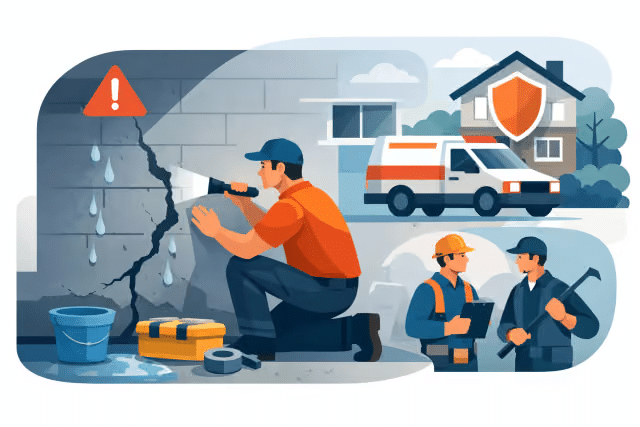
Not every basement crack requires a middle-of-the-night repair crew. Hairline shrinkage cracks in poured concrete, for example, can be common and may not indicate active structural movement. But certain warning signs call for prompt action because they can signal that a wall is under increasing pressure.
A wall that is visibly bowing, bulging, tilting, or sliding inward deserves immediate attention. So do long horizontal cracks, stair-step cracks in block walls, cracks that are widening, or sections of wall that appear displaced. If you can see soil or daylight through a foundation opening, notice debris falling from the wall, or find that a basement door or window has suddenly become difficult to operate, treat the situation seriously.
Water can raise the urgency. Heavy rain or rapid snowmelt saturates the soil outside your foundation, increasing lateral pressure against basement walls. Water entering through a crack is not automatically a structural emergency, but water combined with bowing, widening cracks, or wall displacement should be evaluated without delay.
Put Safety Before Cleanup
If a wall appears to be failing, keep family members, pets, and visitors away from that section of the basement. Do not let anyone lean objects against the damaged wall or use the area for storage. Move valuables only if it can be done safely and without entering a visibly compromised space.
If there is active electrical risk from flooding, avoid standing water and contact the appropriate emergency professional. If you suspect an immediate collapse hazard, leave the area and call emergency services. Structural repair begins with a clear understanding of conditions, not with a rushed attempt to patch visible damage.
Your First Emergency Basement Wall Response Steps
A calm, documented response helps you protect your home and gives a repair professional a clearer picture of what has changed. Start by taking photos and videos from a safe distance. Capture the full wall, close-ups of cracks, nearby water entry, and any signs of movement around windows, floor joists, or support posts.
Next, reduce water around the foundation if you can do so safely. Check whether gutters are overflowing, downspouts are disconnected, or surface water is pooling next to the home. Redirecting roof runoff away from the foundation can reduce added pressure while you arrange an inspection. Do not excavate against a damaged wall yourself, especially during wet conditions. Removing soil incorrectly can create additional instability and expose the foundation to more damage.
Avoid cosmetic fixes. Caulk, hydraulic cement, drywall, paint, and waterproofing coatings may hide a crack, but they do not stop a wall that is moving. A fresh-looking wall is not necessarily a stable wall. Before spending money on surface repairs, determine whether there is an active structural issue behind the crack.
Finally, schedule a professional evaluation as soon as possible. An experienced basement wall specialist can assess crack direction, wall deflection, moisture conditions, and the repair approach that fits your home's condition. Early to moderate movement often has less invasive repair options than advanced wall failure.
Why Basement Walls Start Bowing or Cracking
Most emergency calls have a history behind them, even if the homeowner noticed the issue only recently. Clay-heavy Ohio soils can absorb water and expand, then shrink as conditions dry. That ongoing cycle places repeated force against basement walls. Heavy rainfall, poor grading, clogged gutters, short downspouts, and inadequate drainage can make that pressure much worse.
Freeze-thaw conditions also matter. Water in the soil freezes and expands, driving pressure toward foundation walls during cold weather. Over time, masonry walls may develop stair-step cracking, while poured concrete walls may form horizontal cracks near the middle of the wall, where pressure is often greatest.
Some homes also face structural stresses from original construction details, aging materials, or changes in drainage around the property. The right repair is not based solely on what the crack looks like. It depends on whether the wall is moving, how far it has moved, what is causing the pressure, and whether the wall can be stabilized from the interior.
When Carbon Fiber Is the Right Repair
For qualifying basement walls with early to moderate inward movement, carbon fiber reinforcement can provide a strong, low-disruption stabilization solution. Carbon fiber straps are installed directly on the interior wall using engineered bonding systems. Once cured, the reinforcement helps resist further inward movement without requiring exterior excavation, large steel beams, or wall anchors that extend into the yard.
That matters when you need a repair that protects your home without turning your property into a construction zone. Carbon fiber is thin, strong, and can be painted over after installation. It preserves usable basement space and can often be installed much faster than more invasive repair methods.
Carbon fiber is not the answer to every foundation problem. A wall with severe displacement, major deterioration, or conditions requiring wall rebuilding may need a different approach. Honest recommendations matter because the goal is not simply to cover a crack. The goal is to stabilize the structure using the repair method that fits the actual condition of the wall.
For homeowners in the Columbus area, Union County, and Delaware County, Carbon Fiber Installation LLC focuses on identifying when carbon fiber reinforcement is the smart, permanent solution for a distressed basement wall. A proper inspection should explain what is happening, why it is happening, and what the recommended repair is designed to prevent.
What a Professional Inspection Should Give You
A foundation repair inspection should replace uncertainty with a clear plan. You should understand whether the wall is actively moving, whether drainage is contributing to the problem, and whether stabilization can be completed from inside the basement.
You should also receive straightforward information about installation disruption, expected timing, cost considerations, and warranty protection. Be cautious of anyone who immediately pushes the most expensive option without explaining alternatives, or who promises a permanent repair without evaluating the wall's condition.
A quality repair plan recognizes the trade-offs. Exterior excavation may be necessary in some circumstances, particularly when waterproofing or major wall reconstruction is required. Yet for many qualifying bowing walls, interior carbon fiber reinforcement delivers proven stability with less disruption, less mess, and a more practical investment.
Do Not Wait for Visible Failure
Foundation damage has a way of becoming more expensive when ignored. A small horizontal crack can become a wider crack. Slight inward movement can progress into a wall that requires more extensive repair. Waiting may also affect finished basement plans, homeowner insurance discussions, resale negotiations, and the confidence of future buyers.
The strongest move is not panic. It is a fast, informed response. Keep people clear of a visibly distressed wall, document what you see, manage water away from the foundation where safe, and get a professional assessment before temporary fixes hide a growing problem.
A stable basement wall protects more than concrete and block. It protects your home, your investment, and your ability to use the space below your home with confidence. If a wall is bowing, cracking, or moving, act while a clean, durable stabilization repair may still be within reach.
When to Call the Experts at Carbon Fiber Installation, LLC
Don’t wait for problems to worsen. Schedule a free basement wall inspection if you notice:
- New or widening cracks
- Bowing or leaning walls
- Water stains, efflorescence, or musty odors
- Sticking doors/windows or upper-level cracks
We serve the greater Columbus, Ohio area with 24/7 emergency service and a 100% satisfaction guarantee.
Protect Your Home Today
Your foundation supports everything you’ve built. Investing in professional carbon fiber reinforcement from Carbon Fiber Install, LLC is one of the smartest decisions you can make for long-term structural integrity, safety, and peace of mind. It’s a modern, proven solution that stops damage in its tracks while preserving your home’s usability and resale value.
Ready to take action? Contact us today for a free quote or inspection.
- Phone: (740) 436-9316
- Email: info@carbonfiberinstall.com
- Mailing Address: 322 W. 5th Street PMB 110, Marysville, Ohio 43040
Visit www.carbonfiberinstall.com to learn more about our services, view project inspiration, or request service. Don’t let small cracks become big headaches—secure your home’s future with Carbon Fiber Installation, LLC.