

Repair Options for Leaning Basement Walls
A basement wall that is leaning inward is not a cosmetic issue to watch from a distance. It is a sign that pressure outside the foundation is exceeding what the wall can safely resist. The right repair options for leaning basement walls can stop additional movement, protect your home’s structure, and help you avoid a far more invasive repair later.
The best solution depends on how far the wall has moved, the material of the wall, the cause of the pressure, and whether the movement is active. A straight answer matters here: no honest contractor should recommend the same repair for every wall. But early action gives homeowners more practical, affordable choices.
Why Basement Walls Start Leaning
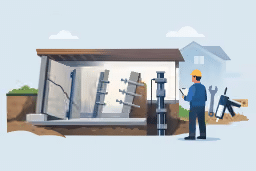
Soil around a foundation expands when it becomes saturated. In central Ohio, seasonal rain, snowmelt, clay-heavy soil, poor drainage, and freeze-thaw cycles can all add pressure against basement walls. That sideways force is called hydrostatic and lateral soil pressure. Over time, a wall can crack, bow, tilt inward, or begin to shear near the bottom.
Water management is often part of the larger conversation, but drainage improvements alone do not reverse structural movement that has already occurred. Once a wall is bowing or leaning, it needs to be evaluated for reinforcement.
Pay attention to changes such as horizontal cracks in block walls, vertical cracks that widen over time, stair-step cracks along mortar joints, a visible inward curve, or basement walls separating from floor joists. Doors or windows sticking elsewhere in the home can also be a clue that structural movement deserves a closer look.
Repair Options for Leaning Basement Walls: What Fits When
There are several established ways to stabilize a leaning basement wall. Each has a place. The key is choosing a method that addresses the wall’s condition without paying for more disruption than the situation requires.
Carbon Fiber Wall Reinforcement
For early to moderate inward movement, carbon fiber reinforcement is often the strongest low-disruption option. High-strength carbon fiber straps are bonded vertically to the interior face of the wall and secured at the top and bottom. Once installed, the system resists further inward movement and helps distribute pressure across the wall.
Carbon fiber is exceptionally strong in tension, yet it is thin and low profile. That matters in a finished or usable basement because it does not take up valuable floor space the way steel beam systems can. Installation is completed from inside the basement, so there is typically no need to excavate landscaping, remove patios, or tear apart exterior features.
This repair is particularly well suited to poured concrete walls and many block walls with horizontal cracking or measurable bowing. It is designed to stabilize the wall in its current position. Homeowners should understand that carbon fiber does not usually push a wall back to perfectly straight. Its primary job is to stop further movement and create long-term structural stability.
For a qualifying wall, that is a major advantage: a clean installation, minimal disruption, and a permanent reinforcement system that can be painted over or incorporated into a finished basement plan.
Steel I-Beams or Vertical Braces
Steel beams have long been used to brace basement walls from the inside. The beams are typically installed vertically against the wall and secured to the floor framing above and concrete floor below. They can be an appropriate solution for walls with more pronounced deflection or conditions that call for a rigid interior brace.
The trade-off is space and appearance. Steel beams project farther into the basement than carbon fiber, which can complicate finishing plans and reduce usable wall area. Installation may also involve more visible hardware and, depending on the system, periodic adjustment.
Steel is not automatically better simply because it looks heavier. The correct choice depends on the wall’s movement, its construction, and the repair design. A specialist should explain why steel is needed if it is being recommended over a lower-profile carbon fiber system.
Wall Anchors
Wall anchor systems use long rods that connect an interior wall plate to an exterior earth anchor installed away from the foundation. The system is intended to counteract soil pressure and stabilize the wall. In some situations, anchors can be adjusted gradually to improve the wall’s position over time.
Anchors can be a useful option when a wall has moved significantly and there is enough accessible yard space for exterior anchor placement. However, they require exterior digging at multiple locations. Landscaping, decks, utility lines, property boundaries, and paved areas can all affect whether this approach is practical.
For homeowners concerned about disruption, it is worth asking whether the wall truly needs anchors or whether interior carbon fiber reinforcement can provide the needed stabilization. The answer depends on the severity of the movement, not on which repair happens to be more familiar to a contractor.
Helical Tiebacks and Exterior Excavation
For severe wall failure, active structural distress, or walls that require major realignment, helical tiebacks or full exterior excavation may be necessary. Excavation allows the contractor to expose the outside of the foundation, address waterproofing concerns, and install an exterior stabilization system.
This approach can be effective, but it is generally the most invasive repair option. It may disturb landscaping, porches, driveways, decks, utility connections, and outdoor living spaces. Costs can rise quickly when access is difficult or restoration work is extensive.
Excavation is not the first choice for every leaning wall. It is the right choice when the wall’s condition demands it. A responsible inspection should separate true structural necessity from unnecessary upselling.
How to Know Which Repair You Need
The decision begins with a professional inspection of the wall itself. The contractor should document cracks, measure any inward deflection, inspect the connection between the wall and framing, and look for signs that the movement is ongoing. The age of the home, wall type, soil conditions, and water patterns around the property all matter.
A homeowner should be cautious of anyone who offers a firm solution without inspecting the basement closely. The difference between a hairline shrinkage crack and a widening horizontal crack is significant. So is the difference between a wall that has been stable for years and one that is visibly moving from season to season.
Ask direct questions during the evaluation: Is the goal to prevent additional movement, or can the system also straighten the wall? Why is this repair better than the alternatives? What disruption should you expect? Is the system engineered for this application? What warranty is included, and is it transferable if you sell the home?
Clear answers help you compare proposals based on value and long-term protection, not just the initial price.
Do Not Wait for a Leaning Wall to Become a Failed Wall
Basement wall movement rarely improves on its own. Soil pressure will continue to act on the wall, especially through wet seasons. What begins as a narrow horizontal crack can become a larger bow, water intrusion path, or structural issue that limits repair choices.
Acting while movement is early to moderate can preserve access to less invasive reinforcement. It also gives you time to address drainage concerns, plan basement improvements, and protect your home’s resale value without the pressure of an emergency.
For homeowners in Columbus, Marysville, and surrounding Union and Delaware County communities, Carbon Fiber Installation LLC provides focused evaluations and carbon fiber reinforcement for qualifying basement walls. A properly installed system, backed by a lifetime transferable warranty, can provide the confidence that your basement wall is stabilized for the future.
If you have noticed a horizontal crack, inward bowing, or a wall that no longer looks straight, take clear photos and arrange an inspection before the next heavy rain puts more pressure on the problem. The right repair is not always the largest one. It is the one that gives your home proven stability with the least unnecessary disruption.
When to Call the Experts at Carbon Fiber Installation, LLC
Don’t wait for problems to worsen. Schedule a free basement wall inspection if you notice:
- New or widening cracks
- Bowing or leaning walls
- Water stains, efflorescence, or musty odors
- Sticking doors/windows or upper-level cracks
We serve the greater Columbus, Ohio area with 24/7 emergency service and a 100% satisfaction guarantee.
Protect Your Home Today
Your foundation supports everything you’ve built. Investing in professional carbon fiber reinforcement from Carbon Fiber Install, LLC is one of the smartest decisions you can make for long-term structural integrity, safety, and peace of mind. It’s a modern, proven solution that stops damage in its tracks while preserving your home’s usability and resale value.
Ready to take action? Contact us today for a free quote or inspection.
- Phone: (740) 436-9316
- Email: info@carbonfiberinstall.com
- Mailing Address: 322 W. 5th Street PMB 110, Marysville, Ohio 43040
Visit www.carbonfiberinstall.com to learn more about our services, view project inspiration, or request service. Don’t let small cracks become big headaches—secure your home’s future with Carbon Fiber Installation, LLC.